

Used-Car Offers: Price, Inspection and Payment Terms
Used-car shopping
Updated October 16, 2026
A useful used-car offer makes the vehicle, condition, price and payment terms clear enough to compare. Broad assurances about value or a quick sale do not supply those details. Whether buying or selling, keep the dated offer and the supporting records together before agreeing to the transaction.
Start with the exact car and a written price
Match the VIN, mileage and equipment to the vehicle being discussed. Ask whether a quoted figure is the vehicle price, a total purchase price or a monthly payment. Those numbers answer different questions, even when they appear in the same conversation.
The FTC’s used-car buying guidance recommends getting an out-the-door price in writing before visiting. An itemized quote lets you see the vehicle price, taxes, fees and any added products, and confirm whether an advertised condition or discount applies. Request the price and terms of each optional product separately.
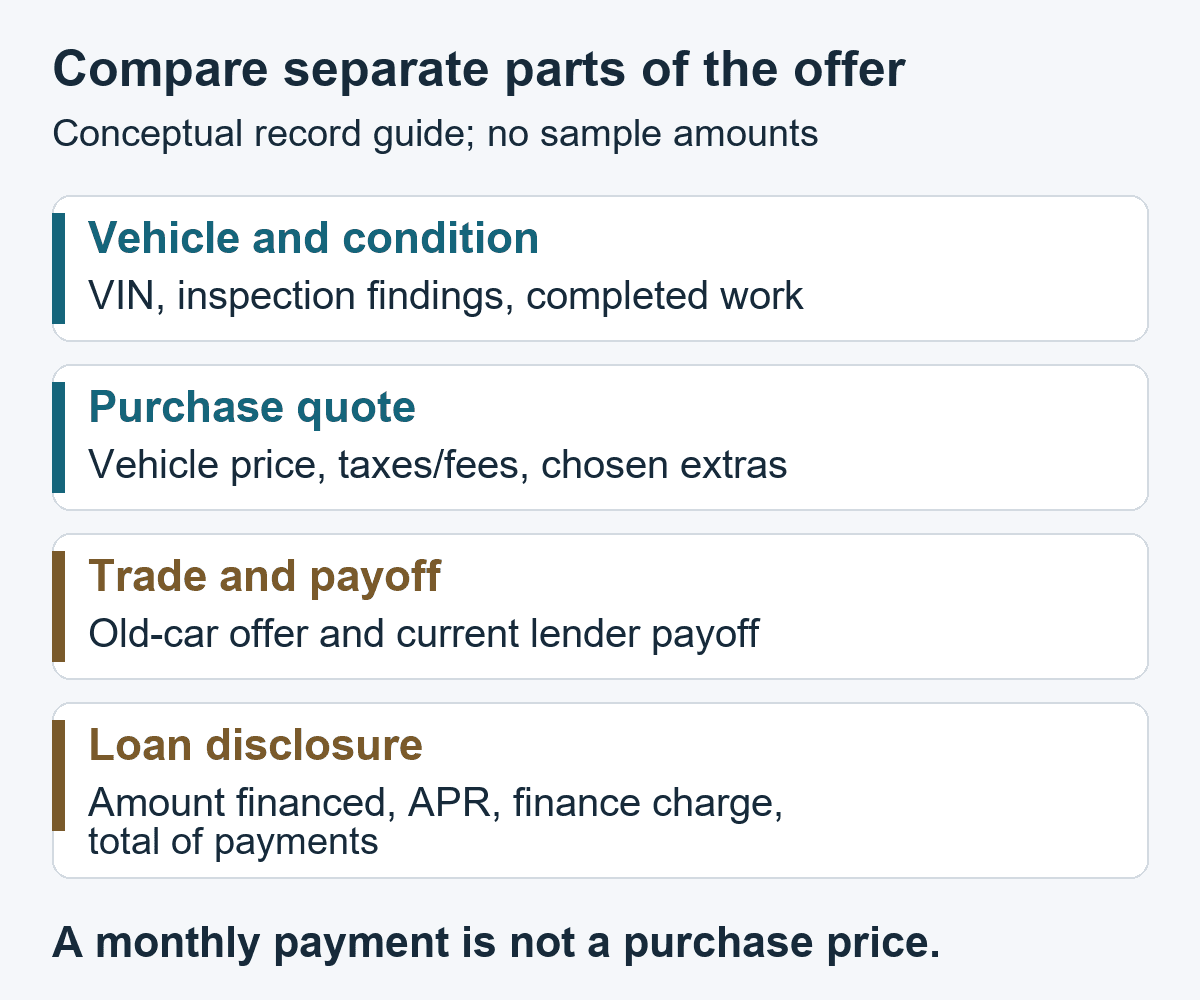
| Record | Question it should answer |
|---|---|
| Vehicle and inspection record | Which car was examined, what was found and what work was completed? |
| Purchase quote | What is included in the total price, and which conditions apply? |
| Trade or purchase offer | What will the buyer pay for the existing car, subject to which checks? |
| Loan disclosure | How much is borrowed, at what cost and over how many payments? |
Read the findings behind an inspection claim
Ask for the inspection record for the exact car, including measurements, identified concerns and completed work. A point count alone does not show whether a particular tire, brake or electrical concern was found and resolved. Keep any recommended work separate from work documented as complete.
The FTC’s guidance distinguishes a vehicle-history report from a mechanical inspection. It also recommends an independent inspection even when the seller has inspected or certified the car. Arrange that assessment before purchase and keep the written findings with the vehicle identification. For a used car bought from a dealer, review the Buyers Guide and the actual warranty terms separately; an inspection record does not by itself create warranty coverage.
Compare the loan beyond the monthly payment
The CFPB’s auto-loan disclosure explanation separates the amount financed, APR, finance charge and total of payments. Ask for the completed disclosure before signing and compare it with the quoted terms. A monthly figure alone leaves the loan length and borrowing cost unanswered.
For example, two offers with the same monthly payment may have different numbers of payments or down payments. Write those inputs beside each other rather than treating the matching monthly figure as an equal total cost. Insurance, maintenance and other ownership expenses need their own budget.
Separate the trade offer from the lender payoff
If a loan remains on the existing car, obtain a current payoff amount from the lender. The CFPB’s trade-in guidance explains why payoff can differ from the statement balance and why adding negative equity to a new loan increases borrowing costs.
Keep the offer for the old car, its loan payoff and the replacement car’s price on separate lines. If selling outright, confirm any remaining inspection conditions, deductions, payment method and timing in writing. A preliminary estimate is not evidence that payment has been made or the old loan has been closed. After the transaction, retain the final documents and confirm the payoff with the original lender.
0 comment(s) so far on Used-Car Offers: Price, Inspection and Payment Terms