

Honda Names Its Next-Generation Hybrid System Honda Hybrid
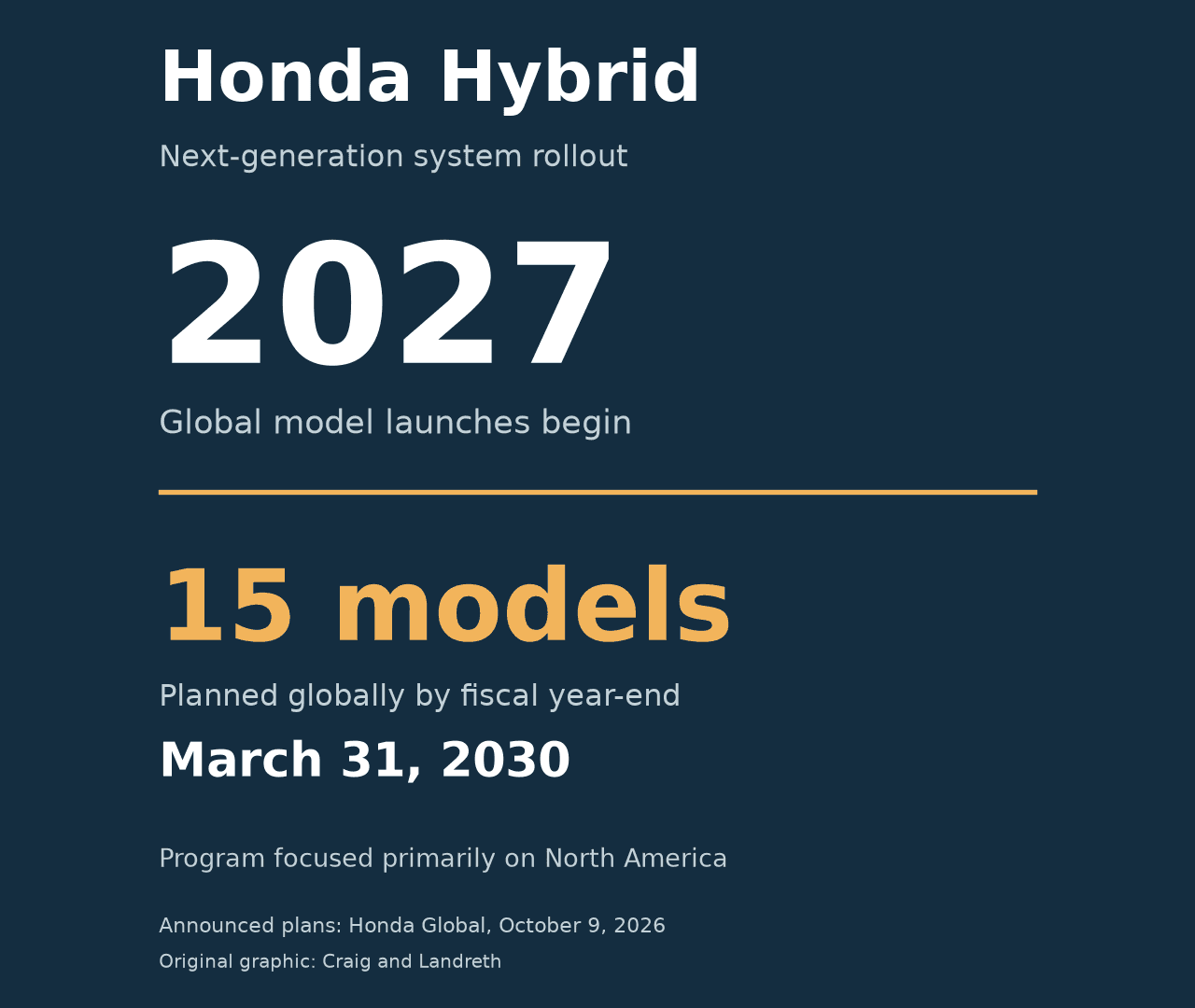
Honda names its next hybrid system
Honda announced on October 9, 2026 that its next-generation hybrid system will use the name Honda Hybrid. The company says the system advances technologies developed for e:HEV, including its engine, drive unit, and control systems. Honda says it wants the next generation to improve fuel efficiency while maintaining driving response, according to its October 9 announcement. This is a system and branding announcement, not a retail-model reveal.
Honda says global rollout of models equipped with Honda Hybrid will begin in 2027. It plans 15 next-generation hybrid models globally by the fiscal year ending March 31, 2030, primarily in North America. The announcement does not name the first U.S. model, provide a U.S. launch calendar, or state prices and EPA ratings. Those specifics remain unknown until Honda publishes vehicle-level information.
A system name is not an EPA rating
A hybrid system name alone does not tell a buyer how a particular vehicle will perform. A conventional hybrid pairs an internal-combustion engine with one or more electric motors and a battery; the battery is charged through regenerative braking and the engine rather than by plugging the vehicle into a charger. A plug-in hybrid can also use electricity from an external charger. The U.S. Department of Energy explains these differences in its hybrid system overview. Honda’s October release refers to hybrid-equipped models but does not say which body styles or configurations will launch first.
Fuel-economy results depend on the finished vehicle, model year, trim, and equipment. Honda’s May 2026 business briefing described engineering goals for the planned system, but goals are not certified MPG values for a production car. When a specific model is announced, use its window sticker and the government’s fuel-economy comparison tool to compare the official figure with other vehicles. Do not convert a company objective into a promise about a named model or real-world mileage.
What shoppers can learn while waiting
The verified plan signals that Honda expects hybrids to remain a major part of its future lineup, especially in North America. It does not say whether a current vehicle will be replaced, which segment will receive the new system first, or whether a model will offer all-wheel drive. Buyers deciding now should compare vehicles currently on sale using published fuel-economy figures, warranty terms, cargo and passenger needs, and the driving pattern they expect. For a look at vehicles available today, shoppers can browse the dealer’s used-vehicle inventory without assuming an upcoming Honda model is represented there.
A useful comparison also separates a conventional hybrid from a plug-in hybrid and a battery-electric vehicle. Each has a different relationship with charging and fuel. A conventional hybrid does not require a charging routine; a plug-in hybrid has an external charging option and an engine; a battery EV uses no gasoline engine. Individual models can differ in battery size and system design, so confirm the official specifications rather than inferring them from marketing terminology.
Follow the model-level details
The next useful update will identify a vehicle and provide its launch timing, equipment, warranty, price, and final EPA label. Compare those published details when available rather than assuming the system announcement establishes the specifications of a future vehicle.
For ownership questions about a vehicle already on sale, check its model-specific owner’s manual and service schedule. The Cooper Automotive service page describes general maintenance services; it is not a source for Honda Hybrid launch details or model-specific maintenance intervals. Those should come from Honda’s vehicle documents when the car is announced. For a specific current used vehicle, shoppers can use the contact page to ask about its listing records, then verify equipment and specifications against the manufacturer’s documents.
0 comment(s) so far on Honda Names Its Next-Generation Hybrid System Honda Hybrid