

TPMS Warning: Pressure, Monitoring and Sensor Findings
Tire monitoring systems
Updated October 16, 2026
A TPMS warning does not establish that a pressure sensor needs replacement. First identify how the vehicle monitors its tires and record whether the warning is steady, flashes before staying on, or appears with a specific message. Those distinctions can change the service question even when the dashboard symbol looks familiar.
Some systems do not measure pressure in each tire
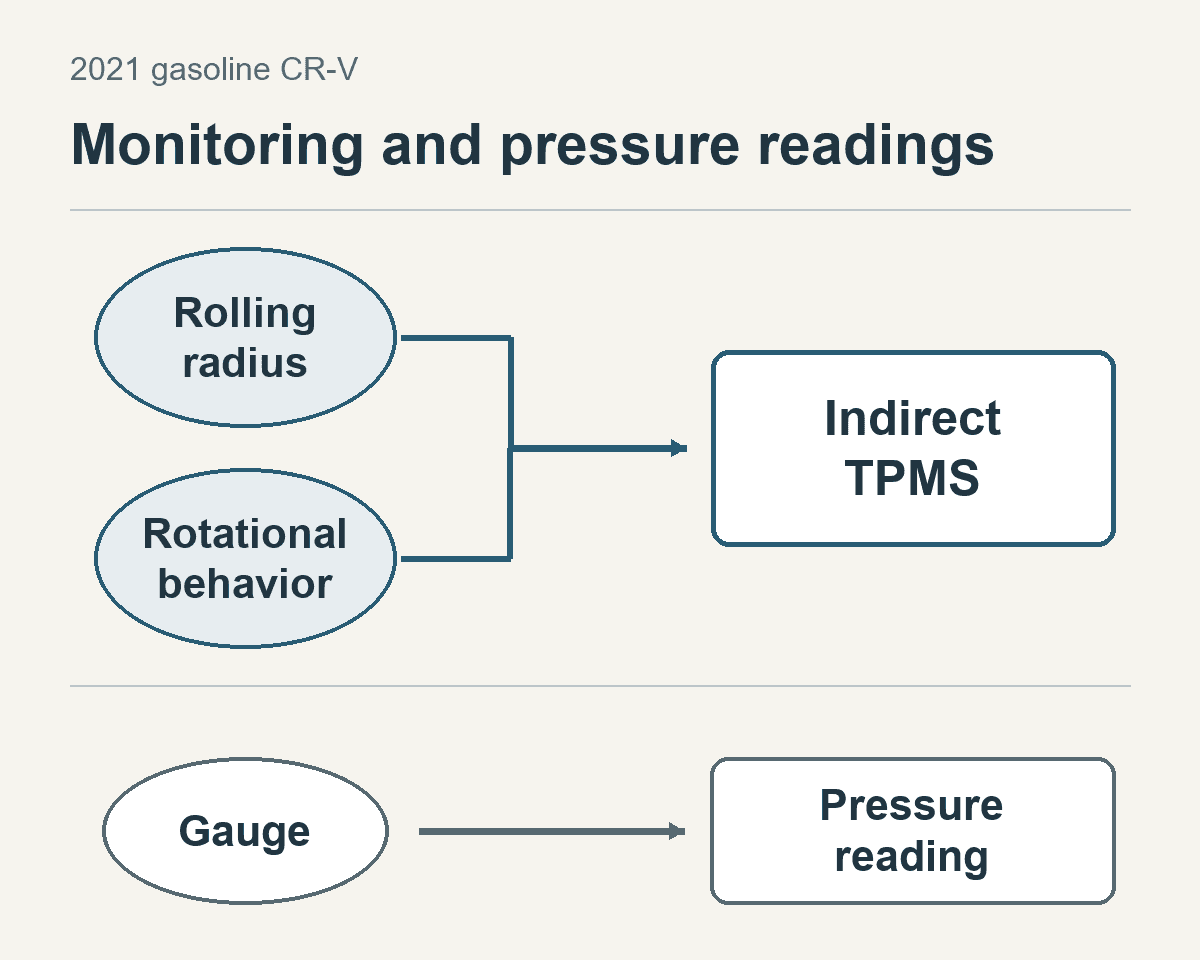
The 2021 gasoline Honda CR-V manual describes an indirect system: it compares wheel rolling radius and rotational characteristics instead of directly measuring each tire’s pressure. A request to replace an in-wheel pressure sensor therefore needs to start with the actual system and a finding that fits it, rather than a generic assumption about every TPMS-equipped vehicle.
Honda says a monitoring-system problem or an installed compact spare can make the combined indicator blink for about a minute and then remain on. A steady low-pressure indication can also involve pressure or calibration status. The pattern is a clue for inspection, not a test that identifies a failed part. Have the observed pattern checked against the instructions for that model.
A sensor-system message still has a defined scope
The 2024 Ford Super Duty manual describes pressure sensors in the wheels on its equipped system. It warns that replacement wheels or tires can affect operation. The manual distinguishes “Tire Pressure Monitor Fault” from “Tire Pressure Sensor Fault”; the latter can indicate a fault requiring service or a spare tire in use. Neither wording names a confirmed failed sensor by itself.
Ford’s combined warning can flash for about a minute and then remain illuminated when the system detects a malfunction. It may then be unable to detect or signal low pressure as intended. A pressure reading and a monitoring-system finding are separate pieces of information; a system fault does not establish that the tires have correct pressure.
Bring the warning pattern and recent tire history
Start with an actual pressure check using the vehicle’s specification. The separate low tire pressure response guide explains the gauge-and-label question. Then note the exact message, whether it appeared at startup or later, and any recent wheel replacement, tire service, rotation or spare-tire use. Do not make another journey just to record the pattern.
Ask the service provider to identify the monitoring design and explain the finding behind a recommendation. On a pressure-sensor system, that includes which position or communication problem was confirmed and how the proposed replacement matches the vehicle. On an indirect system, the explanation should fit that system’s operating requirements. “The TPMS light is on” is an observation, not a complete replacement rationale.
Keep the inspection result and follow-up instructions with the service record. After work, ask how correct tire pressure and restored monitoring were each confirmed. A lamp that is off is not a substitute for the pressure readings, and replacing a component is not the same record as confirming the original concern has been addressed.
0 comment(s) so far on TPMS Warning: Pressure, Monitoring and Sensor Findings