

Blind Spot Monitor Warning: Sensors, Bumper, Or Calibration?
Blind-spot assistance
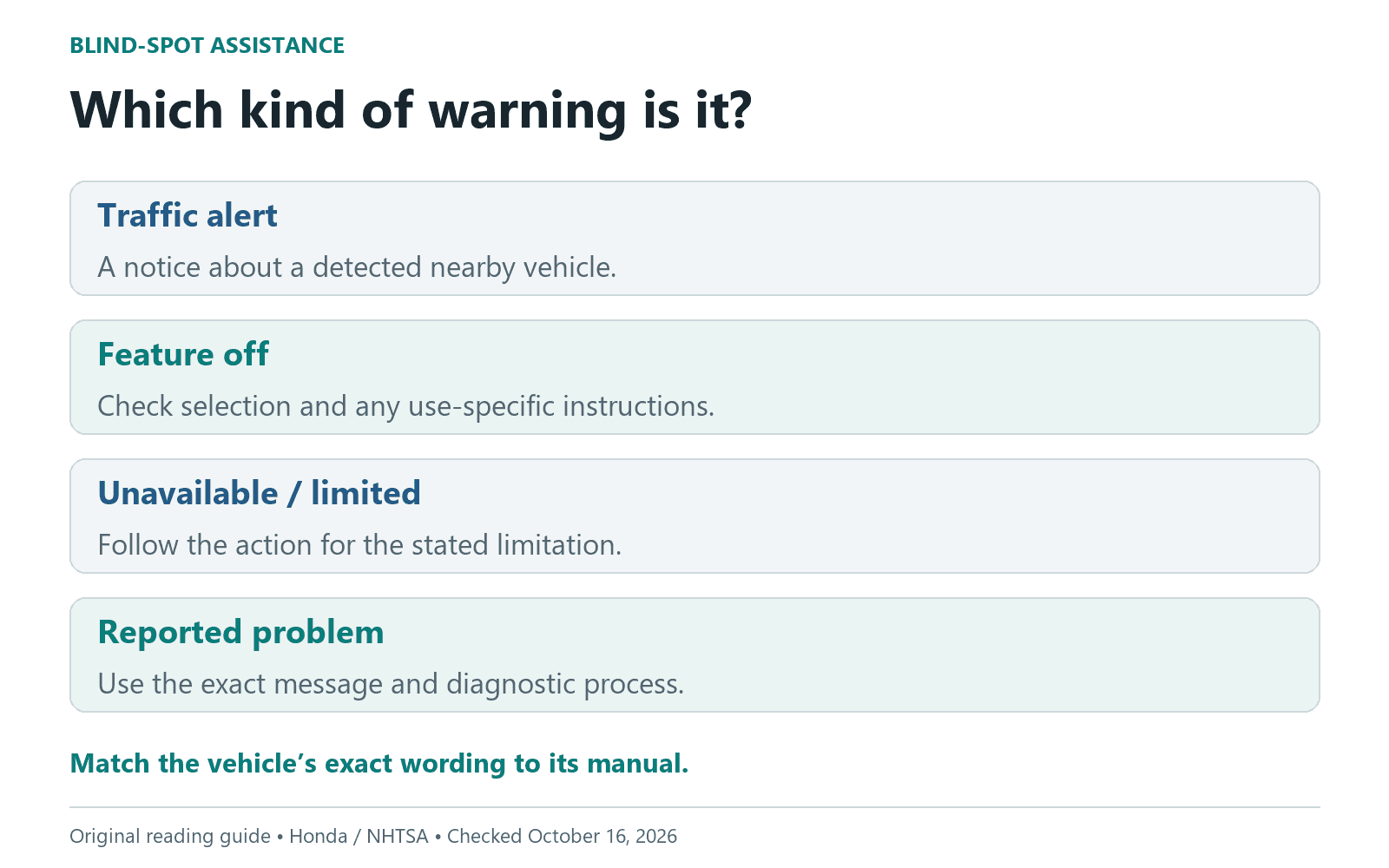
Start with where the blind-spot warning appears and what it says. A mirror alert about a vehicle beside you has a different meaning from a dashboard message that the feature is off, unavailable or reporting a problem. Identify that distinction before assuming a sensor has failed or needs calibration.
Updated October 16, 2026
Know whether the feature warns or intervenes
NHTSA distinguishes blind-spot warning from blind-spot intervention. Warning alerts the driver to a detected vehicle; intervention can add braking or steering assistance. A system’s name does not establish that it provides both. Check the equipment and matching owner’s manual rather than expecting every blind-spot feature to steer or brake.
The sensor arrangement also varies. The examples below concern the radar-based Blind Spot Information system on an equipped 2021 Honda CR-V. They do not describe every model, a camera-based side-view feature or a universal set of dashboard messages.
Separate the traffic alert from system status
The 2021 CR-V owner’s manual describes alert indicators in the outside mirrors. Detection can illuminate an indicator; using the turn signal toward the detected vehicle can make it flash with a beeper. These are traffic alerts within that system’s operating conditions.
The instrument-panel indicator is a separate matter. The manual’s indicator table distinguishes the system being switched off, obstruction near its sensors and a reported system problem. It also warns that an obstruction can prevent a traffic alert even without an unavailable message appearing. An unlit mirror or a clear dashboard therefore does not certify that every nearby vehicle will be detected.
| What you observed | Distinction to make | Useful next check |
|---|---|---|
| Mirror light or alert during ordinary driving | A traffic-detection alert may be the feature doing its job. | Read the manual’s alert behavior and operating limits. |
| Feature shown as off | Selection status differs from a fault. | Review settings and any trailer-use instructions while parked. |
| Unavailable or obstruction message | A stated operating limitation needs its prescribed action. | Identify the named area and follow the matching owner’s instructions. |
| System-problem message or recurring concern | The message requires investigation rather than an assumed reset. | Retain the exact wording and relevant repair history for diagnosis. |
Use the right area and the right conditions
That CR-V manual places the BSI radar sensors beneath the rear bumper corners. It tells owners to keep those exterior areas clean, avoid covering them with stickers and have strong impacts or needed repairs assessed. Follow your vehicle’s permitted exterior-cleaning instructions while safely parked; do not remove a bumper or adjust a sensor to investigate an alert.
Honda also lists limitations involving weather, road shape and the objects being detected. On this CR-V, it instructs owners to switch BSI off when towing a trailer: added load can change radar coverage, and the trailer can itself be detected. That instruction should not be transferred to vehicles with different trailer-monitoring features.
After a repair, ask which procedure actually applies
Honda Canada’s May 31, 2021 aiming job aid provides a specific repair example. Its BSI section lists radar removal or replacement, repair of the body panel where the unit mounts, and rear structural collision repairs. It identifies mounting-area checks for particular work and directs diagnostic troubleshooting before an aiming inspection for specified alignment faults.
This is an attributed 2021 Honda document, not a rule that every bumper repair on every car needs calibration. Ask the repairer to identify the current VIN-specific procedure, what work triggered it and the recorded result. A billed aiming operation and a documented completed inspection answer different questions.
Windshield-camera work involves a different sensor location and repair procedure, covered in our guide to adaptive-cruise warnings after windshield replacement. Glass work alone does not establish that a rear BSI radar requires aiming.
Document ordinary observations without staging a test
Do not position another car beside yours or attempt a lane change to provoke an alert. Record what happened during ordinary use: which side, the exact message, weather and whether the concern followed a repair or accessory change. Review the manual while parked, and let the applicable diagnostic process establish the cause.
Continue checking mirrors and looking for traffic before changing lanes. If the feature reports that it is unavailable or faulty, do not depend on it. A useful repair record identifies the affected system, findings and any required procedure—not just that the warning happened to disappear.
0 comment(s) so far on Blind Spot Monitor Warning: Sensors, Bumper, Or Calibration?