

Loose Steering: Findings Before Parts
Steering
Updated October 17, 2026
“Loose steering” can mean unwanted free play, wandering that required corrections, or a change in assistance. Describe what changed; these complaints do not select the same repair.
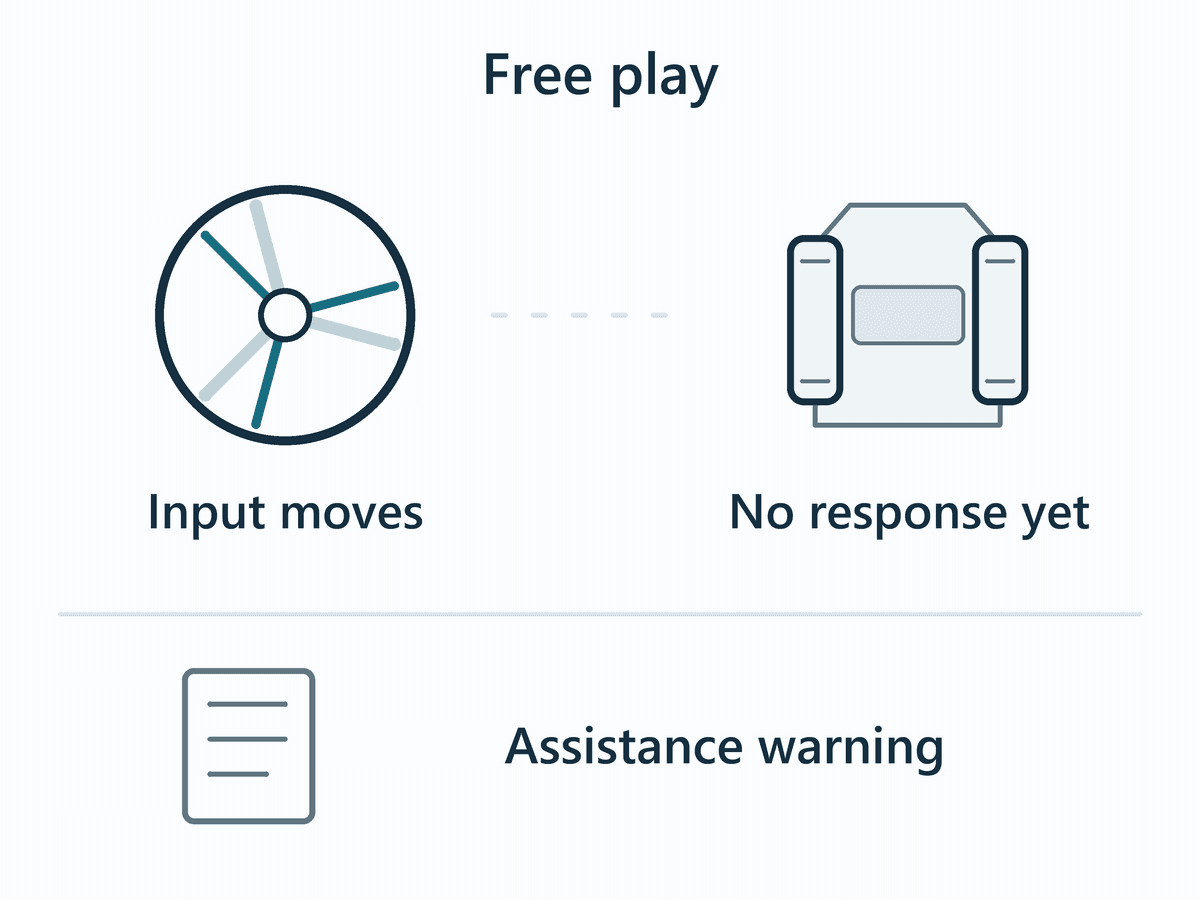
Ask where unwanted movement was found
MOOG’s steering guidance describes free play in steering gear, linkage sockets and suspension joints. Wear can permit unwanted movement between the steering wheel and wheel assemblies. A complaint about wandering does not, by itself, identify a failed rack, tie rod or ball joint.
Ask which component and side showed movement, and how that finding relates to the complaint you reported. Mention an impact, recent work, knocking or a change in control. Arrange prompt professional inspection for unexpected free play or wandering, even without a warning light. Leave deliberate steering tests, lifting and under-car checks to professionals. When arranging inspection, explain unstable control and ask how the vehicle should be transported.
A warning message has its own instruction
The 2024 Ford Super Duty manual distinguishes service messages from “Steering Loss Stop Safely.” For that message, it says power steering is not working and directs a safe stop and prompt checking. A red steering warning also calls for stopping as soon as safe.
These are instructions for that model, not universal message definitions. Preserve your own vehicle’s complete warning text and follow its manual or assistance instructions. Tell the service provider about abrupt changes in steering control when arranging help. Ask whether the recommendation addresses the warning, unwanted mechanical movement, or both. The absence of a warning does not establish that a reported control problem is harmless.
Tire condition can change the handling complaint
Michelin’s handling guidance identifies pressure differences, significant or uneven tread wear and impact-related tire damage as possible contributors to changed steering response. An impact can disturb wheel alignment and damage a tire at the same time. An alignment recommendation alone therefore does not explain whether the tire itself was evaluated.
Give the repairer the timing of an impact or recent tire work and describe any pull or vibration you already experienced. Ask which tire conditions were found and whether the inspection distinguished those from an alignment concern. Do not turn a wear pattern or the apparent direction of a pull into your own component diagnosis. A significant change in predictable control needs attention rather than a deliberate road test to produce a clearer description.
A pressure explanation needs readings and a specification
The 2021 gasoline Honda CR-V manual provides a concrete example: it refers to the driver’s doorjamb label for specified pressure and defines a cold reading as after at least three hours parked or less than one mile driven. Those conditions matter when interpreting a reported number; they are not a universal specification for another vehicle.
If pressure is part of the proposed explanation, request the readings at each tire position, the applicable label specification and whether they were taken cold. Our guide to pressure readings and the vehicle’s specification explains that comparison. Honda’s manual also warns that TPMS does not replace proper pressure maintenance. A lamp that is absent or later goes out is not the measurement supporting a repair explanation. Keep pressure, tire-condition and steering findings distinct when reviewing what the work will address.
0 comment(s) so far on Loose Steering: Findings Before Parts