

Squeaking Brakes at Low Speed: Clues and Next Steps
Brake noise explained
A low-speed brake squeak is a description, not a diagnosis. Its timing, persistence and any change in braking help frame an inspection. The useful next step is to separate those observations from evidence of wear, movement or fitting problems.
Updated October 16, 2026
Separate the sound from a change in braking
Start with what the vehicle did, not the part you think it needs. Was there one short squeak as the pedal first moved, a repeated squeal through each stop, or a continuous metallic scrape? Note any warning message and whether pedal feel or stopping behavior changed. A quiet stop afterward cannot establish the condition of the pads, rotors or hydraulic system.
A changed brake pedal is a separate concern from noise. For example, the 2021 Honda CR-V owner’s manual tells the driver to stop immediately in a safe place if the brake pedal has no resistance. Follow the warning instructions for the actual vehicle and arrange assistance when braking or control is impaired. Do not make repeated stops or special maneuvers to see whether the problem clears.
An occasional squeak is not the same report as persistent scraping
That Honda manual distinguishes an occasional squeak on initial pedal application, which may come from pad vibration, from a continuous metallic friction sound associated with its brake wear indicator. It calls for the latter to be checked. This is a specific manufacturer example, not permission to call every low-speed squeak normal or every metallic sound a worn-out pad.
If the complaint is actually scraping or grinding, describe it that way. Our grinding-noise guide separates braking, turning and coasting patterns. Use observations from driving already completed; recreating the noise is not necessary to give a useful history.
Several components can contribute to vibration
Ferodo’s brake-noise technical guide explains that audible noise involves vibration around the wheel end and is not always caused by the pad itself. Its inspection examples include restricted caliper movement, disc-surface condition, pad fit and anti-noise hardware. These are possibilities to investigate, not a list of parts to replace from a recording.
Visible dust is not a diagnosis either. The 2025 Ford F-150 manual specifically says some brake dust is normal and does not contribute to brake noise. Treat a dirty wheel and a squeak as separate observations unless the inspection establishes a connection.
Ask for the finding behind the repair recommendation
Brembo’s noise-and-vibration guidance recommends looking beyond the replacement pads and discs. It identifies disc wear, correctly fitted shims and springs, and the condition and movement of caliper components among the relevant checks. A recently fitted pad does not settle whether the rest of the assembly is working correctly.
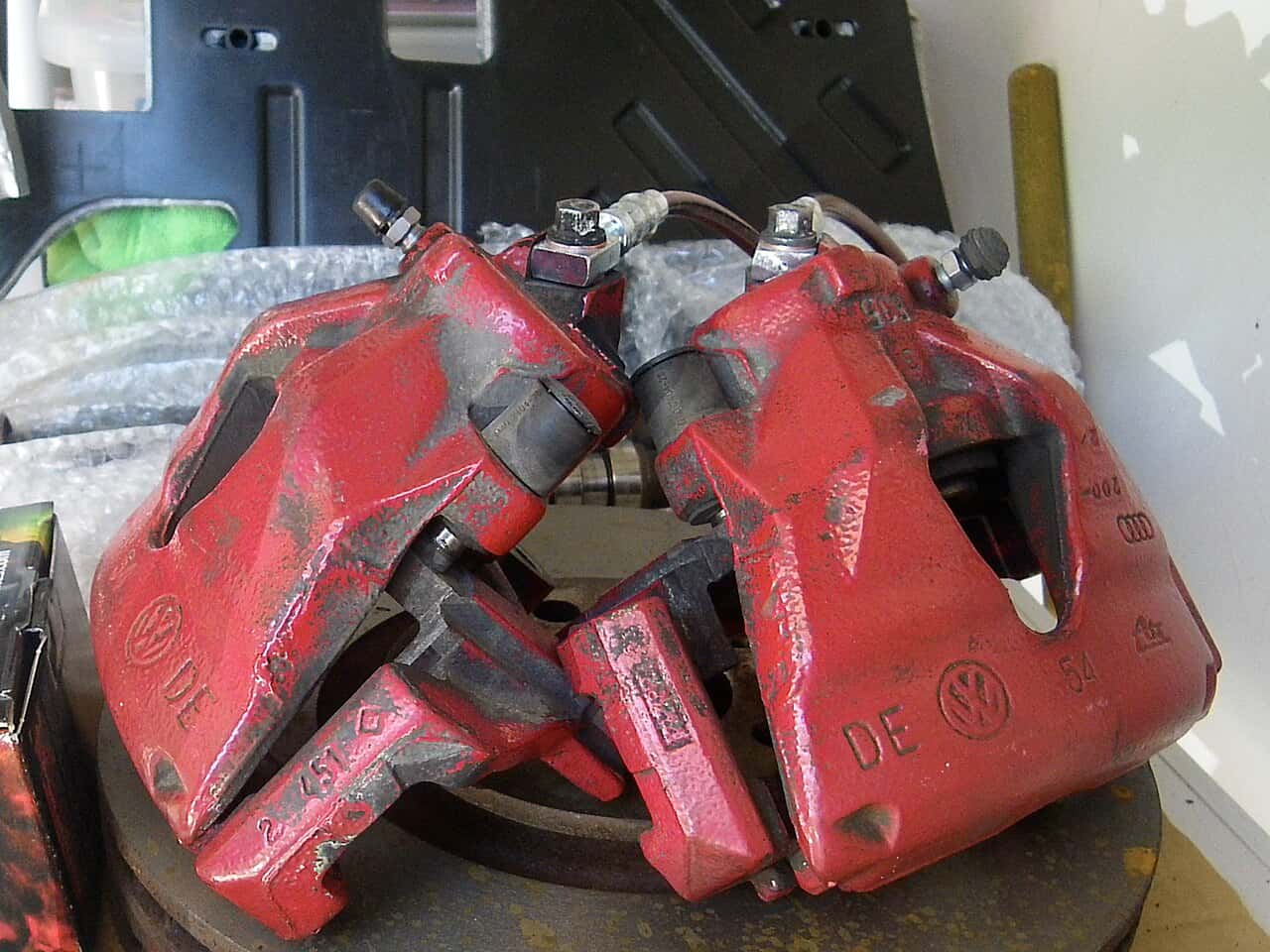

Ask which wheel and component the finding concerns, what measurements were recorded, and which vehicle-specific service limit applies. A pad-thickness measurement answers a different question from a damaged boot, restricted sliding component or incorrectly fitted shim. The estimate should explain which finding the proposed work addresses, without requiring the owner to choose parts in advance.
Give recent work and changing conditions their own place in the history
If the noise began after brake work, bring the invoice and explain what changed. New noise deserves assessment of the complete installation rather than an automatic verdict that the new parts are defective. Ferodo and Brembo both discuss fitting and hardware details; their professional procedures are not a universal owner bedding-in or lubrication recipe.
Once safely parked, write down when the sound began, the conditions you remember, whether it was intermittent or continuous, and any recent brake or wheel work. Include a recording only if one already exists or can be obtained safely while stationary. A useful service record separates the reported noise, the confirmed inspection findings and the work recommended; it also identifies anything that remains unresolved.
0 comment(s) so far on Squeaking Brakes at Low Speed: Clues and Next Steps