

Cold Starting: Why Cranking Behavior Matters
Cold starts
Updated October 16, 2026
Cold reduces available battery power and can make an engine harder to turn. Separate that extra starting demand from what the engine actually did.
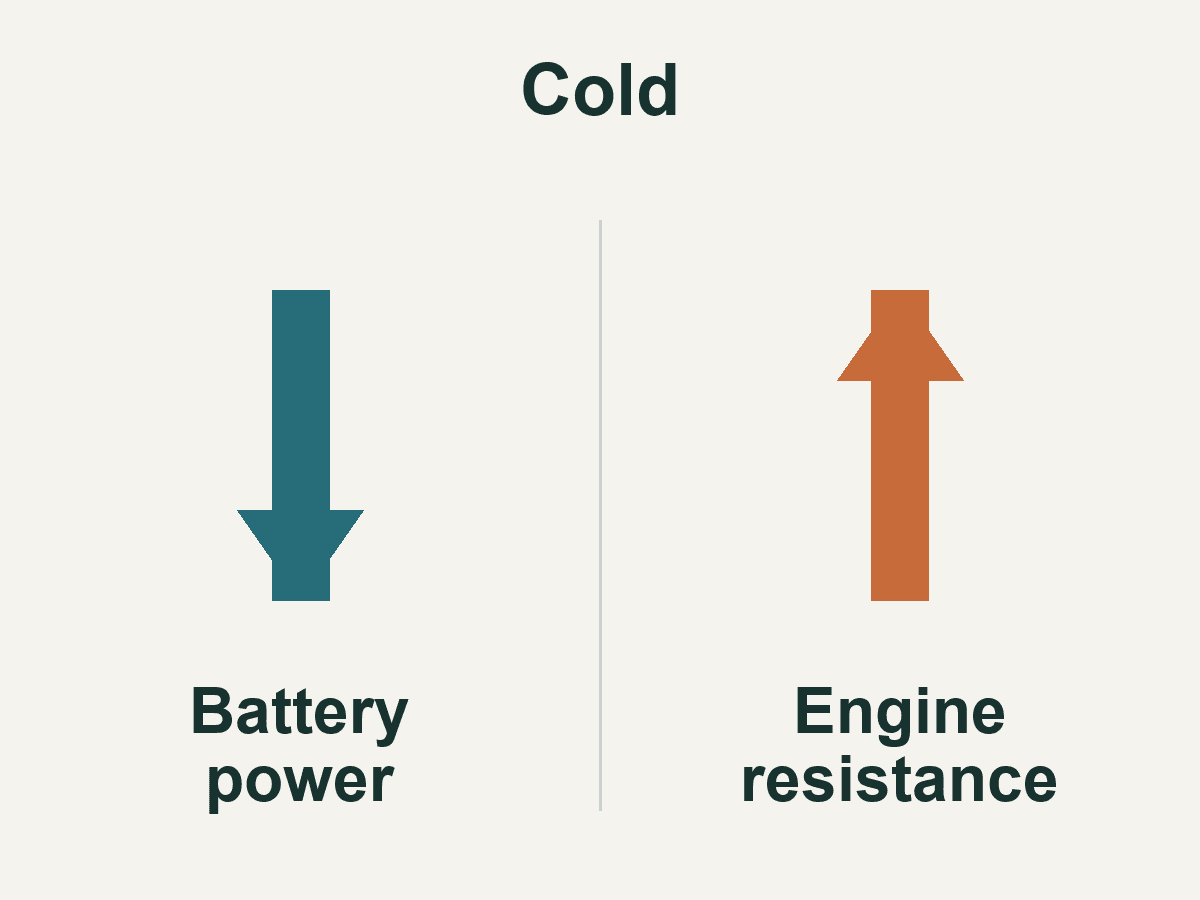
Cold adds load while reducing available power
Battery manufacturer VARTA explains that low temperatures slow the battery’s electrochemical reactions, reducing starting power. Colder, thicker engine oil also increases the resistance the starter must overcome. The combination can make a marginal starting condition more noticeable.
A battery’s state of charge and state of health are separate questions. A battery finding needs its own assessment; the outdoor temperature is context, not a replacement decision.
Which outcome describes the attempt?
The 2021 gasoline Honda CR-V manual separates absent or slow starter operation from normal turning without an engine start. Describe the attempt already made:
| Outcome | Plain-language description |
|---|---|
| No crank | The engine did not turn. |
| Slow crank | The engine turned more slowly than usual. |
| Normal crank, no start | The engine turned at its usual speed but did not begin running. |
Keep any click, key or immobilizer message with that description. None of these rows names the failed part.
Diesel preheating is a separate stage
The 2024 Ford Super Duty diesel manual explains that glow-plug preparation can delay starting for several seconds in extreme cold. A documented pre-start delay is different from an engine already turning slowly. Match the engine, equipment and displayed instruction.
Our cranking, clicks and starting-message guide expands those distinctions. Keep the temperature, parking duration and previous test findings with the complaint. Describe what happened without repeating attempts to improve the recording.
0 comment(s) so far on Cold Starting: Why Cranking Behavior Matters