

Tire Rotation: Patterns, Pressure and Uneven Wear
Tire maintenance
Updated October 16, 2026
Tire rotation moves tires between approved positions to help distribute wear more evenly. It is preventive maintenance, not a repair for lost tread, damage or an alignment problem. The right decision starts with the vehicle’s schedule and the tires actually fitted—not a universal mileage interval or a familiar four-wheel diagram.

Find the instruction for the vehicle and tire setup
Check the model year, tire sizes and any directional markings before choosing a rotation pattern. A drivetrain label alone does not settle the question. Two vehicles with the same drive layout can have different tire or wheel arrangements, and replacement equipment can change which positions are suitable.
The 2021 gasoline Honda CR-V manual, for example, lists rotation as Maintenance Minder sub-item 1. Its rotation section directs owners to the maintenance messages and provides different diagrams for tires with and without rotation marks. That is a documented model example, not a fixed interval for every Honda or every tire.
Directional tires, different sizes and spares change the answer
The Bridgestone and Firestone tire-safety manual identifies several limits. Directional tires must retain their intended direction of rotation. Different front and rear tire or wheel sizes can restrict movement. A temporary-use spare must not be included in the regular rotation.
The CR-V manual’s directional-tire example specifies front-to-back movement rather than moving tires from one side to the other. Do not turn that example into a rule for a different vehicle with different equipment. Where a proposed pattern conflicts with a sidewall marking or the installed sizes, have the instructions reconciled before the tires are moved.
| Equipment or finding | What to establish | What not to assume |
|---|---|---|
| Directional tire | Required direction and approved movement | Every tire can cross to the opposite side |
| Different front and rear sizes | Vehicle-specific position restrictions | Front and rear assemblies interchange |
| Spare tire | Temporary-use versus an approved matching spare | Every full-size spare belongs in the pattern |
| Uneven wear | Condition and alignment findings | Changing positions corrects the cause |
Uneven wear needs an explanation before rotation
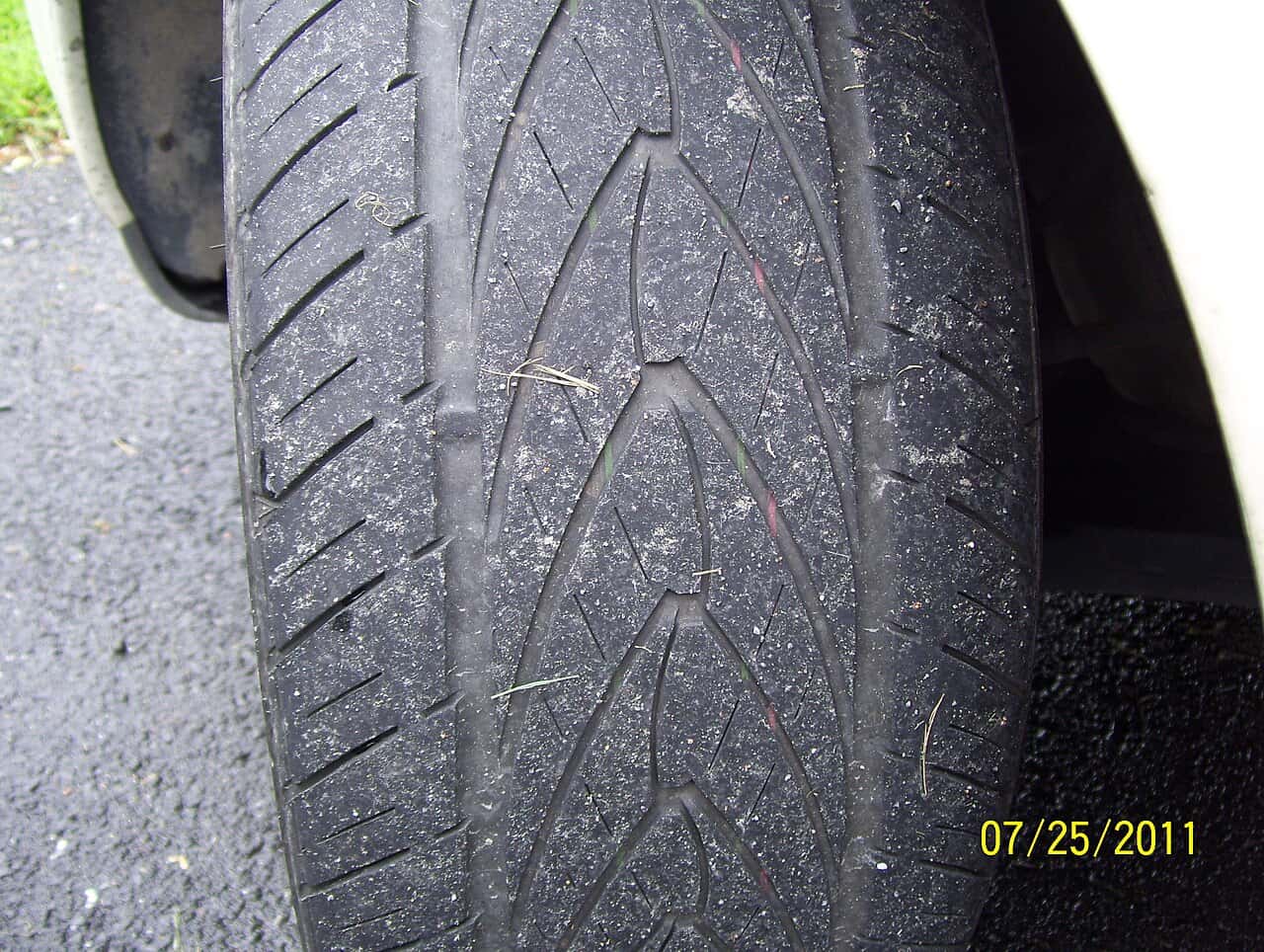
Record tread measurements and the tire positions associated with them. One deeper section does not establish that the rest of the tire is acceptable. A tire professional should assess unusual wear or damage rather than simply relocating it. Moving a tire does not restore rubber that has already worn away.
Ford makes this distinction explicit in its 2024 Super Duty manual: if tires show uneven wear, have alignment checked before rotating them. Bridgestone also calls for an alignment check when irregular wear is evident. Neither instruction establishes that every wear pattern has one cause or that an alignment adjustment can repair a damaged tire.
Pressure and monitoring may need attention afterward
A tire moved to a new position needs the pressure specified for that position. Front and rear requirements may differ. Bridgestone calls for checking individual pressures after rotation and adjusting them to the vehicle manufacturer’s recommendation for each tire’s new location.
Monitoring requirements also depend on the vehicle. The cited CR-V manual requires TPMS calibration after rotation. The Super Duty manual warns about updating the system when front and rear pressure specifications differ and gives its own reset instructions. Ask which procedure applies; do not copy a button sequence from another model.
For an upcoming journey, the separate pressure, tread and damage checks before a trip cover the condition review that rotation alone cannot provide. A rotation entry is not a clearance for a damaged tire.
Keep a useful rotation record
An invoice should make it possible to understand what was done: date, mileage, tire positions, pressure settings and any wear or damage findings. Record a reason if rotation was restricted or postponed. Those details help interpret the next set of tread measurements without treating a tidy maintenance history as proof of present tire condition.
0 comment(s) so far on Tire Rotation: Patterns, Pressure and Uneven Wear