

Fuel Economy Drop: Measure MPG Before Choosing Repairs
Fuel economy
Updated October 16, 2026
A lower MPG number is a reason to examine the record, the journeys and any actual findings separately. It does not identify a maintenance item that will restore a particular result. Rated economy, a dashboard average and a calculation from fuel records should be labelled distinctly.
Build a matching fuel record
The federal My MPG tool is intended to help calculate and track fuel economy and compare it with EPA ratings. For your own notes, keep the dates, distance and gallons together. The fuel volume and distance must describe the same interval; the amount spent at the pump is not the volume.
For a simple hypothetical calculation, 300 miles divided by 10 gallons equals 30 MPG. Those are assumed quantities, not a measurement of your vehicle. A receipt showing fuel purchased does not, by itself, establish how much fuel was consumed during a separately chosen distance.
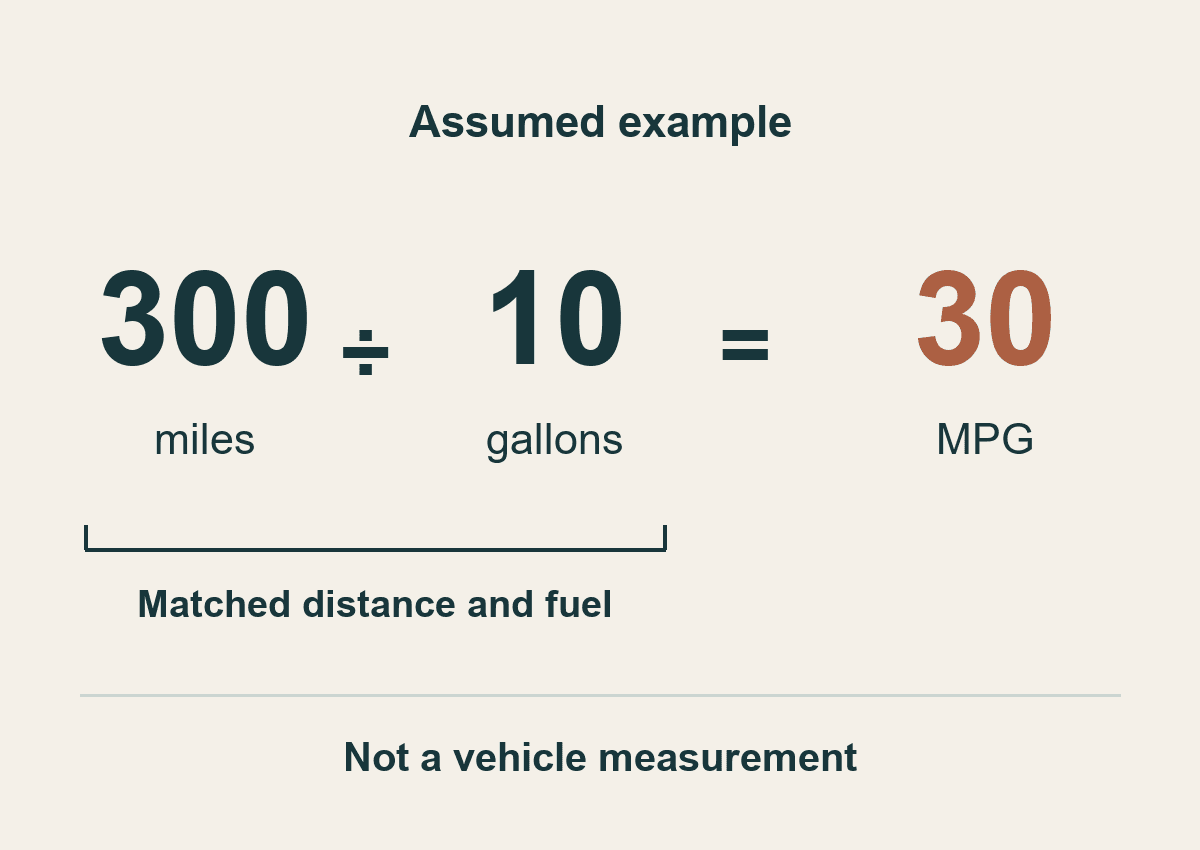
Keep several comparable records rather than replacing the history with one unusually good or poor result. Label a dashboard figure with its displayed averaging period or reset context where known. If the records are incomplete, preserve that uncertainty instead of treating the difference as a measured engine fault.
Keep the operating conditions with the number
DOE’s cold-weather explanation describes increased engine and transmission friction, longer warm-up, the greater effect of short trips and additional power used by heating-related equipment. It also notes winter fuel-blend differences and reduced tire pressure in colder conditions. These explain why the comparison needs context; they do not establish the cause of one vehicle’s change.
Record changes in the existing commute, trip length, idling, weather or accessory use alongside the fuel entries. A different pattern of journeys is not the same comparison as the earlier routine. Bring that history to the service provider with any messages or running symptoms, rather than requesting a repair solely from an MPG percentage.
Maintenance claims need the right engine context
FuelEconomy.gov’s maintenance guidance says replacing a clogged air filter on fuel-injected, computer-controlled gasoline engines or diesels does not improve fuel economy, although it can improve acceleration. It distinguishes older carbureted engines. Filter service and a promised MPG improvement are therefore different claims.
The same guidance points to the vehicle’s specified tire pressure, not the maximum on the tire sidewall. If a pressure warning is present, the low-pressure reading and warning guide covers that separate response. Keep actual readings with the MPG record.
For a warning light or rough running, record that separate concern and follow the actual vehicle’s instructions. Ask which finding connects a proposed repair to the MPG complaint.
0 comment(s) so far on Fuel Economy Drop: Measure MPG Before Choosing Repairs