

Wheel Bearing Symptoms: Humming, Vibration, And Play
Wheel-end noise
A hum that grows with road speed can raise a wheel-bearing question, but tires and other components can produce similar noise. The useful goal is to identify the source and the condition of the wheel end—not to choose a replacement side from how the sound seems to travel through the cabin.
Updated October 16, 2026

What the bearing does
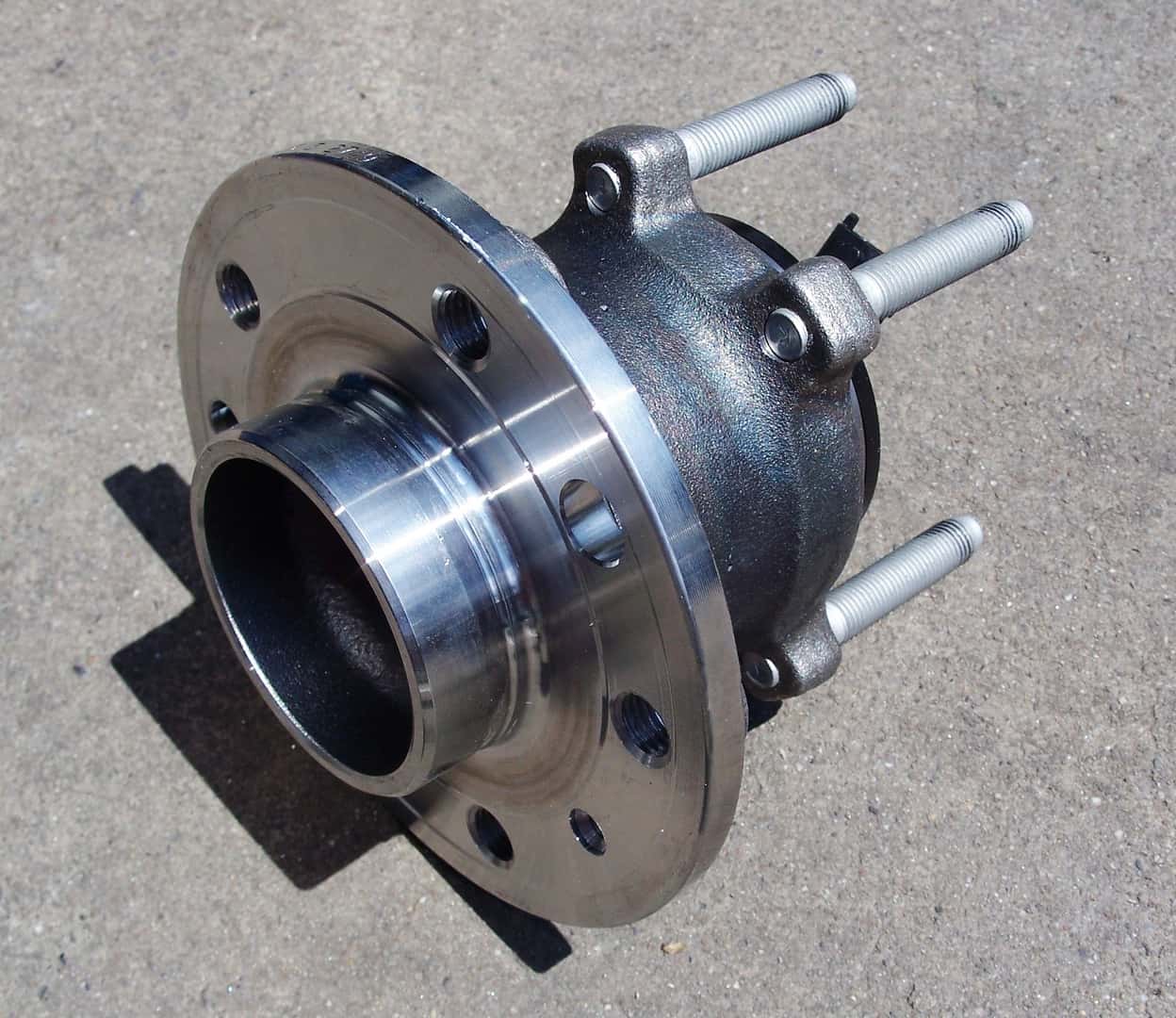
The wheel bearing allows the wheel to rotate relative to its support. SKF’s wheel-end explanation shows how a hub-bearing unit fits among the wheel hub, brake, driveshaft and stationary housing. In a driven-wheel arrangement, the bearing sits between rotating and stationary parts; it is not the same component as the tire or CV joint.
The assembly also has to maintain the required stiffness and clearances for its application. Different vehicles use different bearing and hub designs. That is why a noise investigation needs the actual wheel-end arrangement, rather than a generic instruction to tighten or grease a bearing.
Noise is a clue, not a bearing verdict
Timken’s wheel-hub symptom guide describes several overlapping patterns. Humming, rumbling and growling can involve tires or other drivetrain and electrical components. Clicking on a turn can also involve a CV joint. A shake at a steady speed is not automatically a hub-bearing problem.
That is why a precise description helps more than a parts name. Note when the sound first appeared, whether it varies with ordinary road speed and whether a different surface changes it. Record any behavior already noticed on normal turns. Do not weave across a road or repeatedly load the vehicle side to side to try to identify a bearing.
The tires belong in the comparison
Timken’s separate hub-assembly checking guide starts by considering road surface, tread design, tire wear, alignment and suspension condition. Its inspection then distinguishes a wheel check from assessing the hub after brake components are removed. A brief spin or shake is not the whole procedure.
For an owner, the useful preliminary record is what can be observed safely while parked: visible tire damage, uneven wear, the fitted sizes and recent tire or wheel work. NHTSA’s tire guidance explains tire-condition checks and the vehicle’s recommended cold pressure. Do not change pressure to the sidewall maximum to see whether a hum disappears.
A newly installed tire or rotated set can change the noise pattern without proving that a bearing was repaired. Keep the date and work performed with the complaint. If a shop attributes the sound to tire wear, ask which inspection finding supports that explanation.
Play and roughness need a properly supported inspection
Timken identifies roughness, looseness or noise during the applicable hub assessment as reasons to investigate bearing damage. It also notes that looseness can involve axle-nut retention or clamping. The installed assembly and manufacturer’s procedure determine the repair; “play in the wheel” should be explained rather than treated as a complete parts order.
Leave lifting, brake removal and fastener checks to a properly equipped repairer. There is no universal axle-nut torque, bearing adjustment or hand-check allowance for every car. If steering changes, a wheel feels loose or the vehicle develops severe vibration, arrange an assessment without using another drive as the test.
Connect the inspected source to the repair
A confirmed bearing concern should identify the corner, the installed assembly and the finding that separated it from tire or other wheel-end noise. The work order should distinguish an inspected defect from a component replaced because it was suspected.
If the noise could not be reproduced, keep that uncertainty visible. A bearing replacement that did not alter the original sound calls for reassessing the source, not assuming the same repair is needed at the next wheel. The record should connect the observation, inspected finding and result.
0 comment(s) so far on Wheel Bearing Symptoms: Humming, Vibration, And Play