

Turbo Symptoms: Noise, Smoke and Loss of Power
Turbo systems
Updated October 16, 2026
A whistle, smoke or reduced power can involve the turbocharger or the systems feeding it. The same complaint can appear in several diagnostic branches, so a symptom alone cannot select the repair.
Why the surrounding systems matter
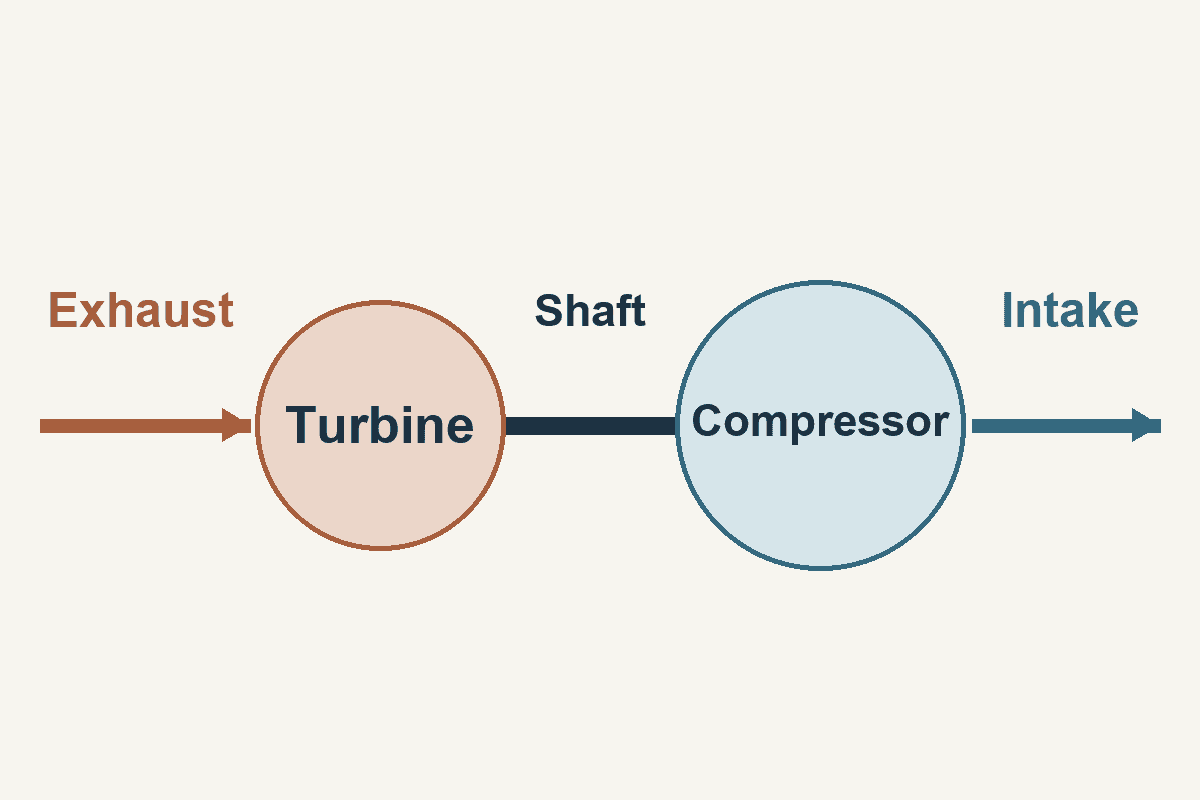
Exhaust gas drives the turbo’s turbine, which is connected to an intake-air compressor. Garrett’s system guide calls for a complete diagnostic check before turbo replacement. Airflow, exhaust flow and the rest of the engine therefore belong in the investigation, rather than treating the turbo as an isolated part.
Compare the complaint with the possibilities
BorgWarner’s diagnostic branches show selected possibilities, not a diagnosis, likelihood ranking or owner test plan.
| Observed complaint | Examples listed by BorgWarner |
|---|---|
| Noise | Intake or pressure-line leaks; exhaust leaks. |
| Reduced power or low boost | Pressure lines; boost control; fuel system; engine wear. |
| Blue smoke | Oil feed or drain lines; crankcase ventilation; engine wear. |
The overlap matters: noise and low boost do not each map to one part. BorgWarner cautions that replacing the turbo alone may leave another engine problem unresolved.
Keep the repair description specific
A report of “turbo noise” is different from a documented leaking line or a confirmed turbo fault. Keep the existing warning wording and circumstances already observed with the service record. A written recommendation should identify what was found and what the proposed work addresses.
0 comment(s) so far on Turbo Symptoms: Noise, Smoke and Loss of Power