

PCV Symptoms: Air Leaks, Oil Loss and the Right Diagnosis
Engine ventilation
Updated October 16, 2026
A positive crankcase ventilation, or PCV, concern can involve a valve, pressure regulator, hose or connection. Rough idle, a whistle, oil loss or a check-engine light does not identify which part needs attention. The useful question is what evidence connects the symptom to the ventilation system on that particular engine.
“PCV valve” does not describe every system’s layout
The part may be built into a larger assembly. In GM’s July 2020 bulletin N202299080, the PCV pressure-regulator valve is part of the engine camshaft cover. Its named applications include certain 2011–2014 Chevrolet Cruze vehicles with a 1.4-liter engine, identified by engine codes LUJ or LUV.
That example matters when reading a repair recommendation. A reference to a cover assembly can concern its integrated ventilation component; it does not automatically mean the diagnosis was an external oil leak. First establish the engine and the component’s actual location and function.
Rough idle and a lean code need an identified air path
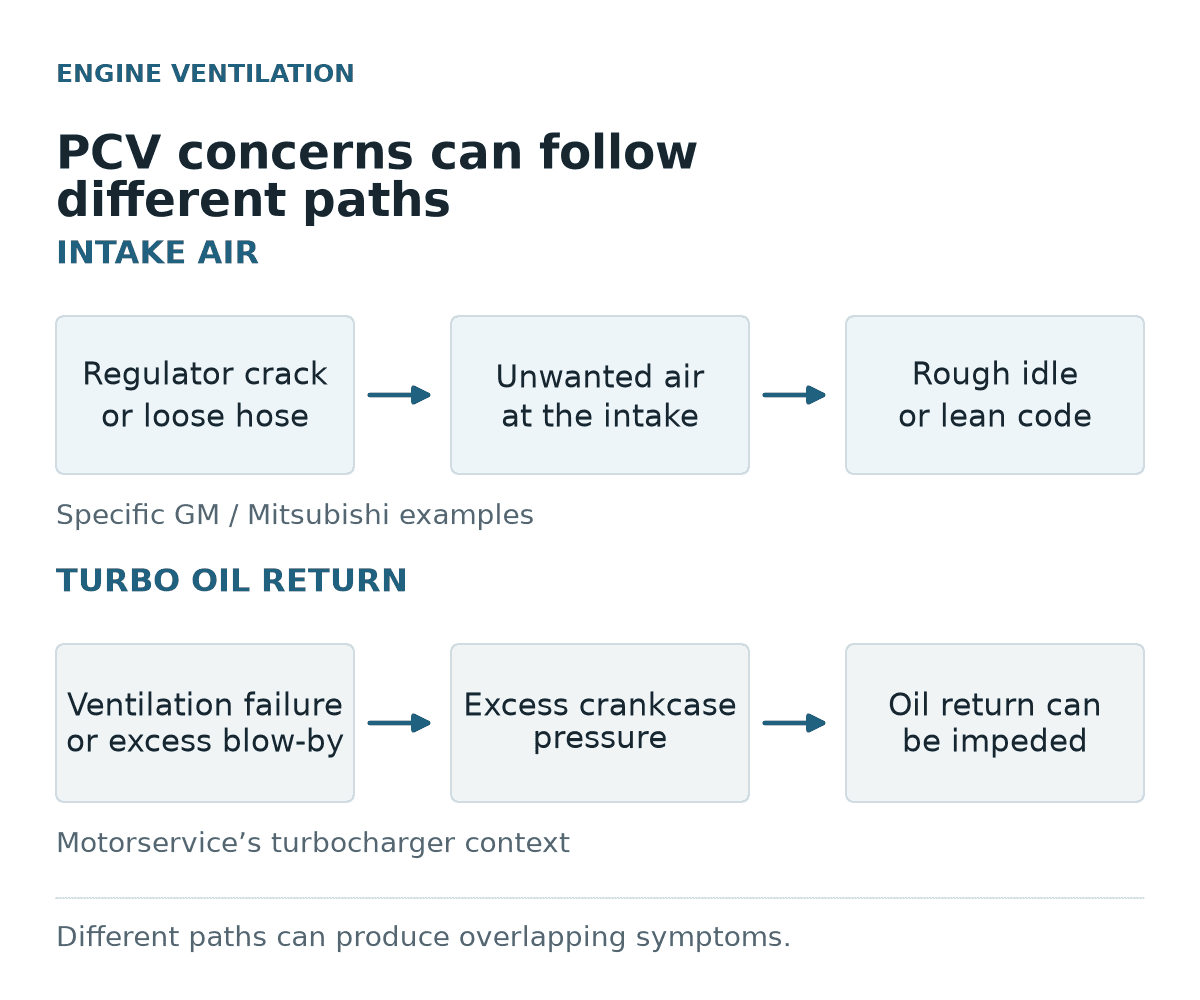
GM describes a diaphragm that can crack, allowing excess air into the intake. On the specified vehicles, the resulting symptoms can include rough running, particularly at idle, an illuminated check-engine light and P0171 or other airflow-related codes. That is a documented failure mechanism, rather than proof that every engine displaying P0171 needs a PCV part.
The bulletin directs technicians to diagnose the code and confirm the valve fault. It also specifically distinguishes its leaking-PCV condition from an oil-leak claim under that historical program. Its program terms do not establish today’s coverage or eligibility for an individual vehicle.
The connection can matter as much as the valve
Mitsubishi’s October 2014 Tech Talk describes a different concern on 2014–2015 Mirage vehicles: a loose PCV vent hose at the intake manifold associated with rough idle or lean/misfire codes. The notice asks technicians to document the connection before repairs.
For an owner, the lesson is to ask which part of the system was implicated. “PCV problem” is less informative than a finding identifying a damaged regulator or a particular hose connection. These two manufacturer examples have different hardware and circumstances despite overlapping symptoms.
Oil loss does not settle the diagnosis
Motorservice’s turbocharger guidance lists crankcase-ventilation failure as one possible reason crankcase pressure becomes excessive. In its turbocharger oil-leak discussion, it also identifies excessive engine blow-by, an obstructed oil-return line and an overfilled oil level as other possible factors.
That explains why a turbocharger-area oil concern should not become an automatic PCV-valve or turbocharger replacement. The location of the oil and the cause of the pressure imbalance are separate questions. This particular guidance concerns turbocharged-engine oil return; it is not a diagnosis for every seep, plume or oil-consumption complaint.
| Reported concern | Useful supporting detail |
|---|---|
| Rough idle or airflow code | The applicable engine and confirmed source of unwanted intake air. |
| Ventilation-system connection | The particular hose, regulator or integrated assembly involved. |
| Oil loss on a turbocharged engine | Where oil was found and which ventilation, return-path or engine condition was established. |
Keep the repair record specific
Record when the concern occurred, the dashboard message or stored code already reported, and any documented oil-level change or recent engine work. Give those observations to the technician without disconnecting hoses or opening the system on a running engine to recreate a noise.
Ask what confirmed the fault and why the proposed part addresses it. If a pressure measurement was used, the result and the matching specification are more useful than the word “bad.” A dated invoice identifying the component, diagnosis and completed work gives a future reader something concrete to evaluate; it does not promise that every similar symptom has the same cause.
0 comment(s) so far on PCV Symptoms: Air Leaks, Oil Loss and the Right Diagnosis