

Battery Dies Overnight: Charge, Draw and Warning Evidence
Parked battery discharge
Updated October 16, 2026
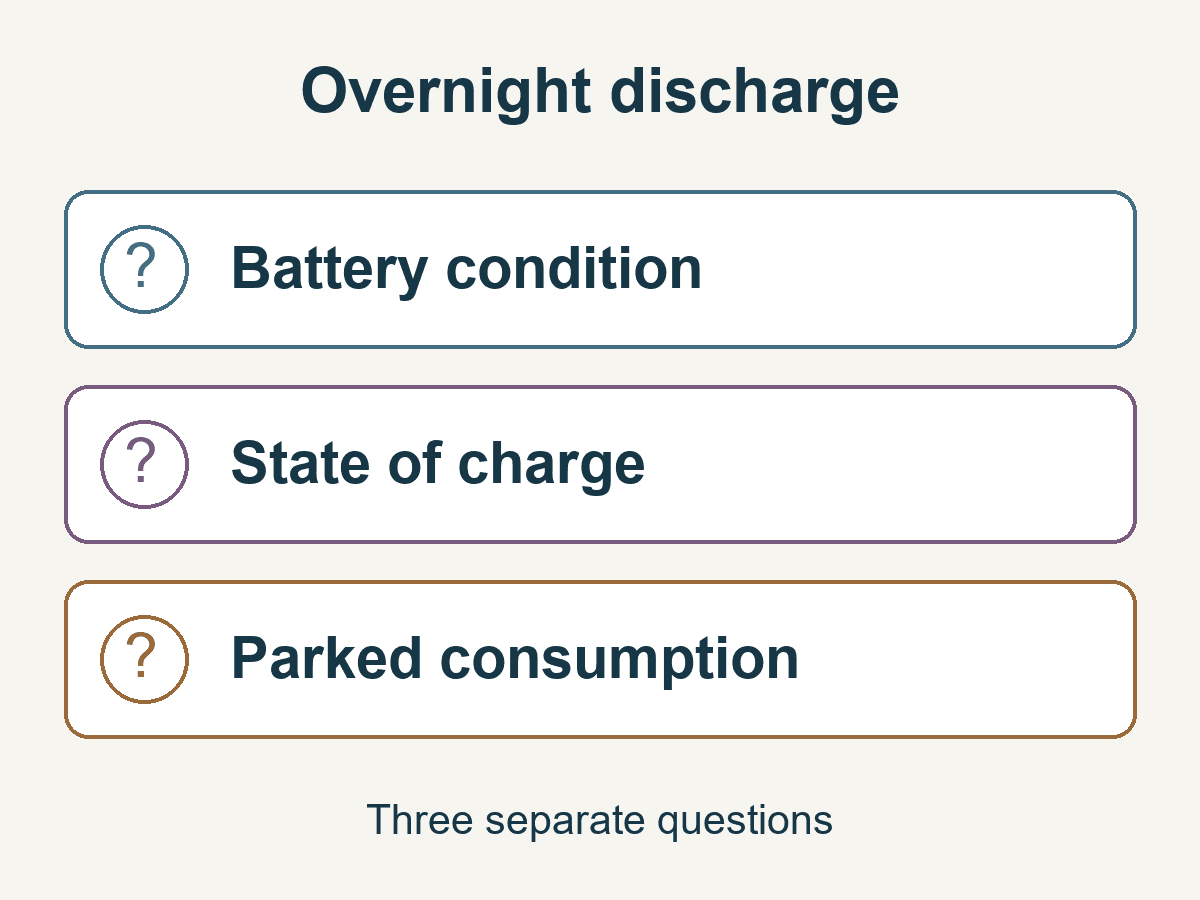
A vehicle that will not start after a night parked has an outcome to explain, not a confirmed electrical draw. Keep three questions separate: the battery’s condition, its state of charge before parking, and what used power while it sat. Another replacement battery does not answer all three.
Keep the parking interval in the record
Write down the last successful start, the approximate time parked and what happened at the next attempt. Include any message already displayed, recent charging or jump-start assistance, and accessory or lighting work. Say whether the concern followed one night or several days; avoid turning “overnight” into an assumed measurement of battery capacity.
The useful comparison is between documented conditions before and after the parking interval. Ask whether the battery was assessed in a charged state and whether the investigation established unusual consumption while parked. A discharge, a battery-condition finding and an identified electrical cause belong as separate entries on the repair record.
A battery-protection message has a specific meaning
The 2024 Ford Super Duty manual says its battery management system can temporarily disable electrical features when excessive drain is detected. Its notification describes protection in progress, rather than establishing a replacement need. The manual also explains that relearning charge state after battery replacement or some external charging can require a locked, ignition-off sleep period. This example is not a universal sleep time or a reset instruction.
Ford separately treats a battery warning illuminated while driving as a charging-system error requiring immediate assessment. Record such an earlier warning when requesting assistance; a parked discharge and a warning observed with the engine running are different parts of the history.
Why recent equipment work can matter
GM’s March 12, 2024 bulletin PIC6541 gives a narrow example: North American 2014–2019 Cadillac CTS models with a dead-battery concern and/or multifunction-switch indicators remaining illuminated. GM identifies aftermarket lamp assemblies that can feed voltage back into the body control module and keep it awake. This connects an equipment change with a particular documented mechanism; it does not establish that a lamp or module caused another car’s discharge.
Keep the invoice and installation date if lights or other electrical equipment were changed. Give the provider that history alongside the parked-time pattern. Do not substitute a list of possible accessories for evidence identifying the actual source of consumption.
Ask what the investigation established
A useful explanation identifies how battery condition and charge were assessed, the vehicle state during any parked-consumption measurement, and the finding linking abnormal consumption to the recommended work. Ask whether the original parked interval was considered and what follow-up is appropriate if the concern returns. A statement that “the battery passed” leaves the separate draw question unanswered.
Before authorizing another battery, distinguish a component recommendation from an explanation of the repeat event. Keep the actual findings, work performed and subsequent observations together. There is no universal current limit or fuse-removal sequence supplied by these two examples; electrical testing belongs with the service information for the exact vehicle.
0 comment(s) so far on Battery Dies Overnight: Charge, Draw and Warning Evidence