

Fuel Pump Warning Signs: Pressure, Power and Diagnosis
How Cars Work
Updated October 16, 2026
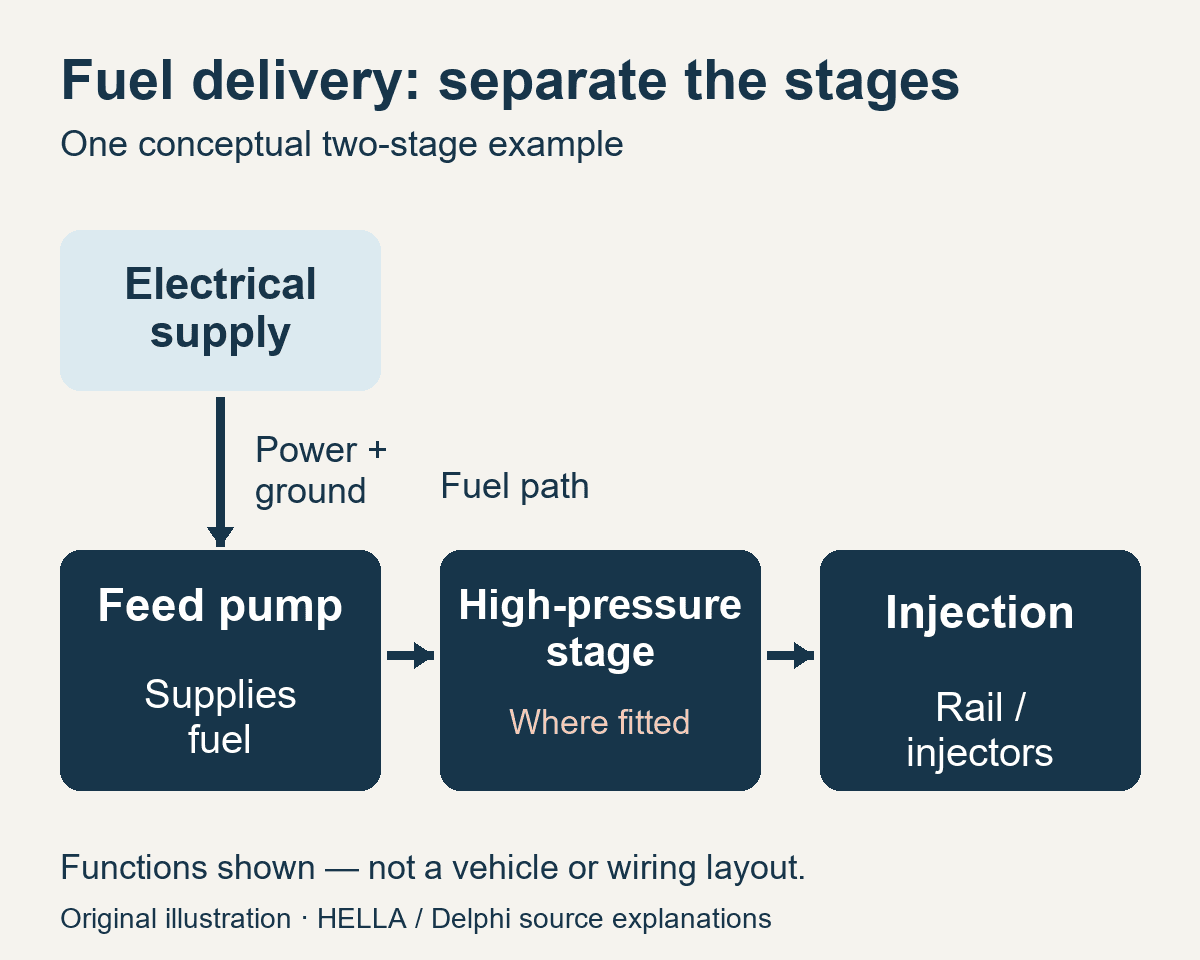
Hard starting, stalling and weak acceleration can accompany a fuel-delivery problem, but they do not identify which part failed. A useful diagnosis separates the pump that supplies fuel from the electrical circuit that runs it and, where fitted, the engine’s high-pressure fuel system. The repair recommendation should explain which path was tested.
First identify which pump is being discussed
A fuel feed unit moves fuel from the tank toward the engine. Depending on the application, the pump sits inside the tank or underneath the vehicle. HELLA’s fuel-feed overview also distinguishes the pump from the larger assembly, which can contain a filter, connections and a fuel-level sender. A proposal to replace a complete module should identify what is included.
Some engines have another pressure stage. HELLA’s high-pressure-pump explanation illustrates an electric feed pump supplying a separate pump that raises pressure for injection. The rail, pressure sensor and control valve are additional parts of that example. A complaint described simply as “low fuel pressure” leaves an important question unanswered: low pressure at which point?
A weak electrical supply can imitate a weak pump
Delphi’s electrical-diagnosis guidance explains that insufficient pressure and flow do not necessarily mean a pump has failed. Low supply voltage, poor connections or a bad ground can make a functioning pump underperform. Its guidance calls for the vehicle manufacturer’s electrical checks before condemning the pump.
This is why “the pump isn’t making enough pressure” and “the pump itself is defective” are different findings. The first describes a result. The second needs supporting evidence that separates the pump from its power supply and related controls. These are workshop measurements, not a reason to bridge a relay or probe a connector yourself.
Match the finding to the complaint
| Observation | Evidence that helps explain it |
|---|---|
| The engine cranks but does not run | Whether fuel delivery was checked during that condition, rather than only after the engine restarted. |
| Low pressure or flow | The measurement location, applicable vehicle specification and electrical-supply findings. |
| A high-pressure-system concern | How the feed stage, pressure regulation and sensor information were evaluated. |
A number needs its operating context
The correct pressure depends on the actual fuel system. The feed stage and an injection rail are not interchangeable measuring points. Ask the repair record to name the engine, test location, operating condition, measured result and manufacturer’s specification. A pressure number without those details is difficult to assess.
HELLA lists difficult starting, extended cranking, intermittent stalling and poor acceleration among possible fuel-pump symptoms. It also notes that other vehicle systems can prevent a pump from operating. Those lists help define a complaint; they are not a parts-selection chart.
After the repair, watch the original symptom
Keep the diagnosis and work performed with the original symptom description. Repairing an electrical connection is different from replacing a pump module. If hard starting, stalling or weak acceleration returns during ordinary use, note when it happens and report it. Do not deliberately recreate a stall or loss of power in traffic.
0 comment(s) so far on Fuel Pump Warning Signs: Pressure, Power and Diagnosis