

Driveline Clunk When Accelerating: Mounts, Joints, Or Axles?
Driveline behavior
A clunk when acceleration begins can be the sound of the driveline taking up load, but it can also require a specific repair. The moment it happens matters more than the word “clunk.” Separate a noise at takeoff, a pause after selecting a gear and a sound over a bump before deciding that mounts, joints or an axle need replacement.
Updated October 16, 2026

First describe the change in load
Useful details include whether the vehicle was starting from rest, returning to the accelerator after coasting, changing direction or crossing an uneven surface. Record whether the clunk occurred once or repeated, and whether it came with a delay, vibration or change in movement. These observations organize the complaint without identifying a failed component.
Do not repeatedly shift between Drive and Reverse or abruptly apply power to demonstrate the sound. An account of an event that already happened is enough to begin an assessment. If movement is unpredictable or accompanied by a significant warning, follow the vehicle’s instructions and arrange assistance.
Some clearance is designed into a driveline
GM’s July 2024 bulletin 99-04-20-002O explains how clearance between interacting gears can contribute to a clunk when load is reversed. Several components’ clearances can add together. The bulletin covers listed 2025-and-prior GM cars and trucks, with an explicit exclusion for the specified 2020–2024 Corvette dual-clutch application.
The vehicle does not have to reverse down the road for its driveline load to change direction. Coasting and then returning to the accelerator changes the way the gear clearances are taken up. That is the load-change event the bulletin discusses, rather than an assumption that the transmission has selected the wrong gear.
The important qualification is comparison and diagnosis. GM calls for comparison with a like vehicle and reference to its service information. Its discussion of normal driveline lash does not establish that every clunk on a GM vehicle is normal, much less a new or worsening noise on another manufacturer’s car.
It also explains why replacing one component may not remove the sound when the assessed condition is accumulated design clearance. That is different from finding a worn or defective part. Ask which of those findings the recommendation actually represents.
A similar symptom can have a specific component remedy
FCA’s June 2024 rear-propshaft bulletin 03-004-24 provides a contrasting example. It concerns listed 2021–2023 Ram 1500 DT pickups with the supercharged 6.2-liter engine and a defined production cutoff. The complaint is a driveshaft clunk while stopping or beginning to apply throttle at takeoff.
Its procedure distinguishes the reported condition and checks the installed driveshaft part before the applicable replacement. A truck having the same body shape, or a clunk in another situation, does not satisfy those requirements. The document is a vehicle-specific service example, not a universal driveshaft replacement instruction or a promise of warranty coverage today.
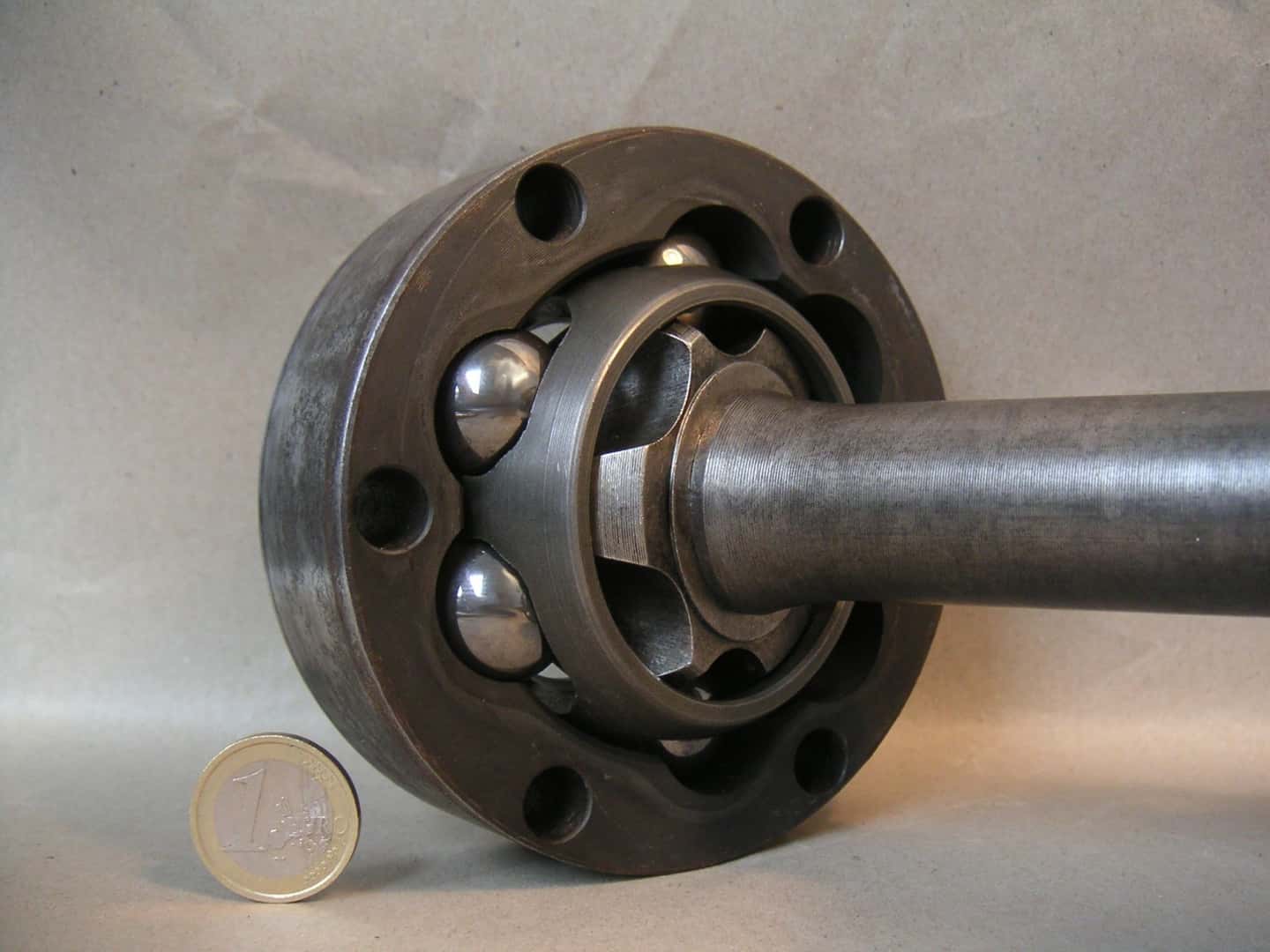
These two bulletins illustrate different conclusions that can follow similar everyday language. One addresses assessed driveline clearance; the other identifies a particular component concern. Neither lets a reader diagnose a mount, U-joint, CV joint or differential from a recording alone.
Keep the complaint and the recommendation connected
| Detail | Record the actual event |
|---|---|
| Operating moment | Takeoff, throttle reapplied after coasting, range selection or bumps |
| Vehicle response | A sound alone, a delay, vibration or unexpected movement |
| Identity and history | Year, powertrain, drive mode, recent repairs or modifications |
| Result | Condition reproduced, exact finding and applicable procedure |
Ask the repairer to explain what separated normal take-up from excessive movement or a component fault. A road-test impression, a measured or inspected defect and a bulletin matched to the vehicle are different kinds of evidence. The estimate should say which supports the proposed work.
Keep any relevant work history with that explanation. Toyota’s description of technical service bulletins also makes a useful distinction: a TSB is not a recall. Finding a bulletin online neither establishes that its condition exists on the vehicle nor automatically makes the repair free.
0 comment(s) so far on Driveline Clunk When Accelerating: Mounts, Joints, Or Axles?