

Car Won’t Shift Out Of Park: Brake Switch, Battery, Or Shifter?
Ownership and troubleshooting
A car that will not shift out of Park needs a controlled check, not more force on the selector. The brake-shift interlock, electrical supply and shifter mechanism can all matter. First confirm that the vehicle is secure, then follow the normal starting and shifting instructions for its exact model.
Updated October 16, 2026
.jpg)
Keep the car secure before investigating
Hold the service brake and apply the parking brake as the manual directs. Keep people clear of the vehicle’s possible path. Do not ask someone to rock the car, crawl underneath it or push against it while another person tries the selector.
Record the gear indication and any message on the instrument panel. A selector that physically will not move, a rotary control that turns but does not select a gear and a transmission that selects Drive but will not propel the vehicle are different complaints. Describing which occurred is more useful than calling all three a transmission failure.
The brake signal is a clue, not a diagnosis
Ford’s 2012 F-150 owner’s guide describes an interlock that requires the brake pedal to be pressed with the ignition in the appropriate mode. It also identifies a fuse or brake-lamp concern as possible reasons for failure to release. That is a model-specific example, not proof that another vehicle uses the same switch, circuit or release mechanism.
Where it can be done safely without moving the vehicle, check whether the brake lamps illuminate when the pedal is pressed. If they do not, do not drive the car. If they do, the result still does not rule out every interlock or control fault. A lamp observation cannot replace testing of the signals the vehicle’s modules actually receive.
Electrical power and mechanical movement need separate checks
Note whether the car starts normally, whether displays flicker and whether the problem followed a discharged battery, jump-start or console work. Those details may help a technician decide what to test; working cabin lights do not establish that voltage and connections are healthy under every required load.
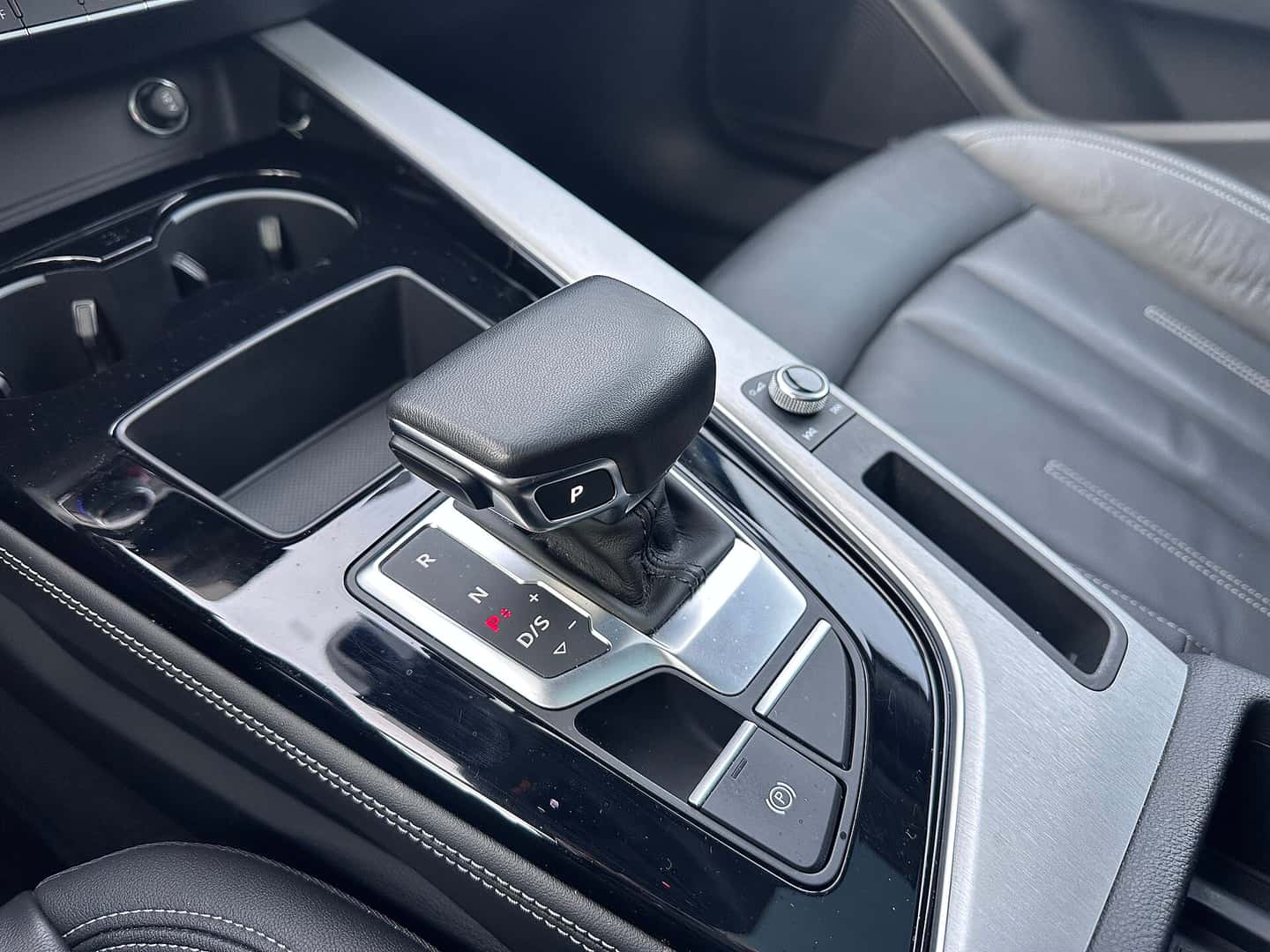
Also describe a stuck release button, a damaged selector, visible debris or a recent spill. Avoid prying trim or forcing the control. The technician can determine whether the selected position, electrical command and actual transmission position agree before recommending a brake switch, shifter assembly, cable or other part.
A shift-lock release is not a repair
Some vehicles provide a manual release. For example, Honda’s 2025 Accord instructions require securing the vehicle and describe the exact release location and sequence. That procedure should not be copied to a different model or selector design.
Releasing Park can allow the car to roll. Ford’s guide expressly warns about that movement and requires the parking brake before its override procedure. Honda calls for the selector to be checked after its release is used. Neither outcome establishes that normal driving is safe or that the original fault has gone away.
If the car needs recovery, tell the operator that it is stuck in Park and identify the drivetrain and selector type. Use the matching manual’s transport instructions. Successfully selecting Neutral is not permission to flat-tow any vehicle, and a generic online override sequence is not a substitute for the manufacturer’s recovery procedure.
For example, Tesla’s Model Y transport instructions distinguish limited repositioning for loading from transport with the wheels on the ground. A mode that lets a vehicle roll can still have strict limits.
The repair explanation should identify what prevented release, how it was tested and whether normal shifting and brake-lamp operation were confirmed afterward. That is a useful result; simply getting the lever to move once is not.
0 comment(s) so far on Car Won’t Shift Out Of Park: Brake Switch, Battery, Or Shifter?