

Timing Belt vs. Chain: Maintenance and Service Records
Owner Guide
Updated October 16, 2026
A timing belt and a timing chain perform the same essential job: keeping the crankshaft and camshaft movement synchronized so the valves operate at the right time. The ownership difference is the maintenance the particular engine requires. “Belt” does not establish one universal replacement interval, and “chain” does not mean the system can never wear out.

Start with the exact engine
Identify the model year, engine and market before looking up timing service. A badge or model name alone may not describe the installed engine. Use the manufacturer’s maintenance information for that configuration, then compare it with the vehicle’s records. A visible accessory belt in the engine bay is not evidence that the hidden timing drive has been serviced.
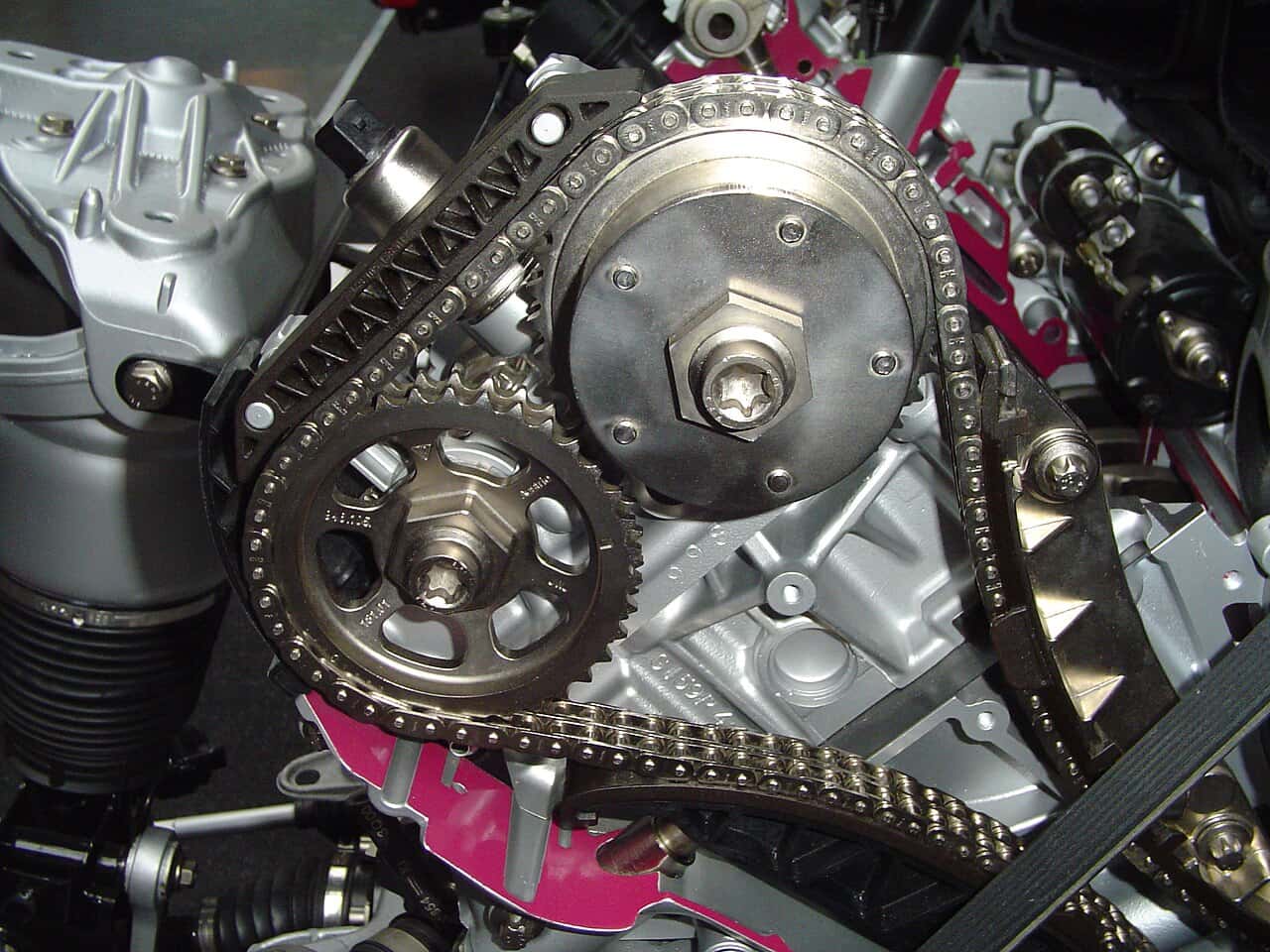
Continental explains that a toothed timing belt transfers motion through its matching sprockets. The system can also include tensioners, idlers and, on some engines, a belt-driven water pump. A timing chain uses a metal chain with guides, sprockets and a tensioning mechanism. Gates notes that hydraulic chain tensioners depend on engine oil pressure; the chain is part of a system rather than a stand-alone lifetime guarantee.
A real example of a belt-service requirement
The U.S. 2025 Honda Pilot Maintenance Minder lists timing-belt replacement and water-pump inspection under sub-item 4, alongside spark-plug replacement. Honda adds a specific belt interval of 60,000 miles for regular operation above 110°F, below −20°F, or while towing a trailer. Those are the Pilot’s stated conditions, not a general rule for every Honda or every timing belt.
The wording also matters when reviewing an estimate: Honda specifies replacing the belt and inspecting the water pump in that maintenance item. Continental separately recommends replacing a pump driven by the timing belt during a belt change. Ask which instruction applies to the engine and why related work is proposed, rather than assuming every timing job contains identical parts.
Oil matters to more than chains
Gates identifies incorrect oil, low oil level and overdue oil changes as contributors to chain-system wear and hydraulic-tensioner problems. A maintenance record is useful here because a quiet engine during a brief viewing does not document its oil history or establish the condition of hidden guides and tensioners.
Some engines also use a timing belt designed to run in oil. Continental’s technical workbook explains that these applications need the exact approved oil specification; fuel dilution and contaminated oil can affect the belt. Do not apply advice for a conventional dry belt to a belt-in-oil engine, or add an aftermarket treatment on the assumption that any lubricant will help.
What records should show
A meaningful timing-service invoice identifies the vehicle, service date, mileage and work performed. Look for the timing belt or chain specifically, together with the documented related components. An entry saying only “belt replaced” may refer to an accessory belt. A reminder sticker is useful, but a legible repair record gives more detail about the actual job.
If records are missing, do not invent a service date from the car’s appearance or assume a previous owner followed the schedule. Establish what is due under the manufacturer’s instructions and have any symptoms evaluated. Rattling, rough running or timing-related faults are reasons for diagnosis, not proof that one particular chain component has failed.
Why guessing carries a risk
Continental warns that incorrect valve timing can allow valves and pistons to collide on affected engine designs. That is why timing work requires the correct instructions and tools. It is not a reason to declare every unfamiliar noise catastrophic, but it is a reason to keep scheduled belt replacement separate from a “wait until it makes noise” strategy.
0 comment(s) so far on Timing Belt vs. Chain: Maintenance and Service Records