

Spark Plug Replacement: Due Service or Misfire Diagnosis?
Ignition and maintenance
Spark plugs need replacement according to the correct maintenance schedule, and worn or damaged plugs can contribute to misfires. Rough running, hard starts or worse fuel economy can have other causes too. Separate a service that is due from a fault that has actually been diagnosed.
Updated October 16, 2026
Start with the schedule for the actual engine
A spark-plug replacement can be due even when an engine still runs smoothly. Find the maintenance schedule for the exact model year and engine, then compare it with the mileage and dated service records. Check the schedule’s footnotes and operating-condition requirements rather than borrowing an interval from a different engine.
The 2025 Ford F-150 manual, for example, lists more than one spark-plug replacement interval with application footnotes. A single mileage figure without those qualifications is incomplete advice. The plug’s material name is not a universal service interval either: DENSO distinguishes long-life and other iridium designs.
What wear can change
DENSO’s service-life explanation describes electrodes gradually wearing and the gap increasing. The voltage needed to fire the plug can rise. If reliable ignition is lost, the engine can misfire, lose output or waste fuel. That explains why scheduled replacement matters; it does not mean a change in fuel economy proves the plugs are worn.
Record a rough idle, hesitation or hard start if it occurs during normal use. Include whether the engine was cold or warm and any warning already displayed. Do not deliberately load the engine or take another drive to reproduce a misfire.
A misfire code identifies a problem, not automatically the part
Ford’s 2005 coil-on-plug diagnostic bulletin illustrates the distinction. For its listed vehicles and cylinder-specific misfires, technicians were instructed to distinguish fuel, mechanical and ignition causes before separating a coil problem from a plug problem. It is a historical professional procedure, not a repair instruction for every modern engine.
Ask which cylinder or operating condition was affected and what evidence identified the cause. A replacement proposal should explain why the plug, coil or another component is implicated, rather than treating all of them as interchangeable answers to the same code.
Deposits are clues that need an explanation
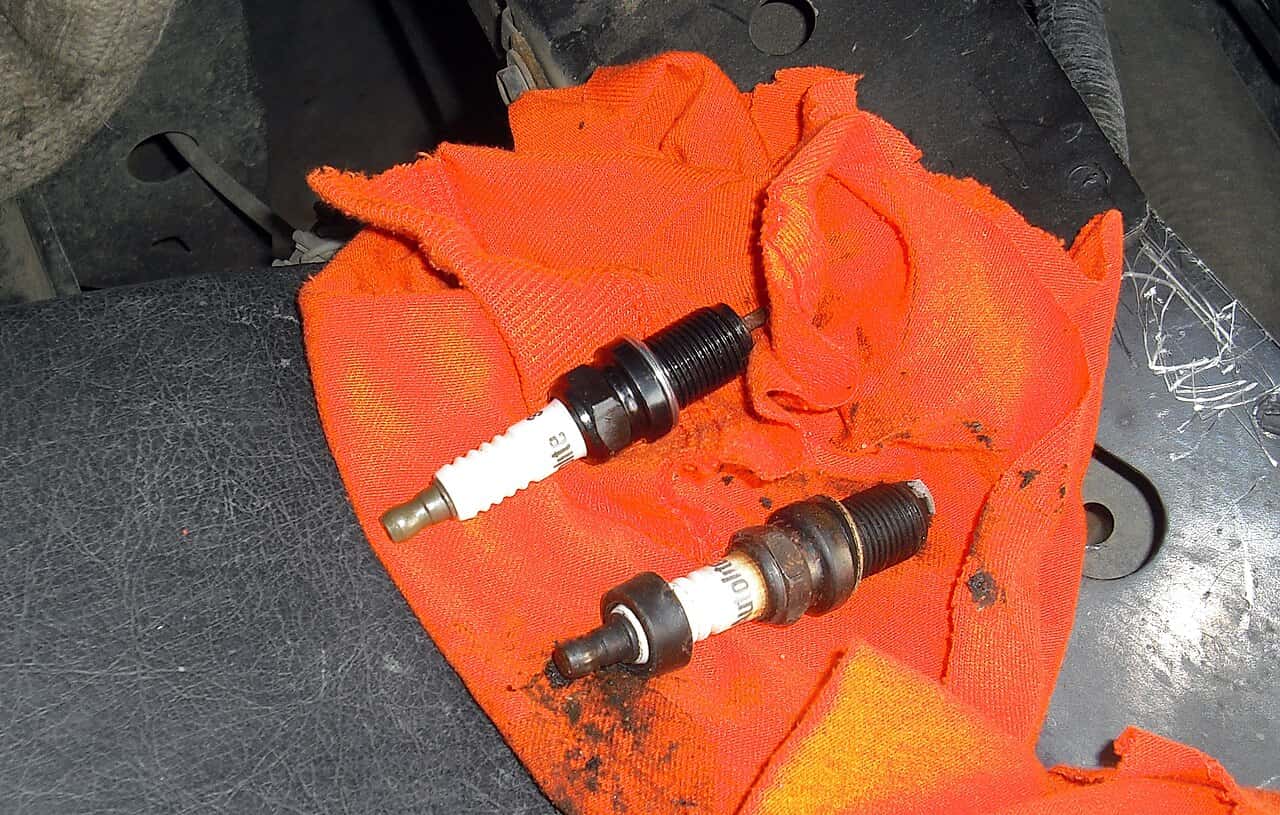
DENSO’s troubleshooting guide distinguishes worn electrodes, dry carbon deposits, wet oily deposits and physical damage. Several conditions can produce poor starting or misfiring. The guide also identifies a brown corona stain above the metal housing that can occur without affecting plug performance.
Have the removed plugs identified by cylinder and assessed in context. Deposits can point toward a mixture or oil-entry concern that a new set alone would not explain. A photograph is useful documentation, but color alone should not become a complete engine diagnosis.

A flashing warning changes the priority
The 2025 F-150 manual’s malfunction-indicator section says flashing can indicate a misfire and warns that increased exhaust temperature can damage the catalytic converter or other components. It calls for avoiding heavy acceleration and deceleration and having the vehicle checked as soon as possible.
That is a specific manual example, not permission to continue driving another vehicle. Follow your vehicle’s warning instructions and arrange assistance when its condition or instructions require it. Do not postpone an active warning because a routine plug service is still months away.
The replacement specification matters
NGK explains that a factory-set gap may not match every engine using that plug part number. The correct application and gap must follow the manufacturer’s specifications; fine-wire electrodes can be damaged by improper adjustment. Ask that the invoice identify the installed part and applicable specification. This is a reason for careful service, not a universal gapping or tightening recipe.
0 comment(s) so far on Spark Plug Replacement: Due Service or Misfire Diagnosis?