

Radiator Fan Not Working: Overheating At Idle
Cooling and temperature
Overheating while stopped or in traffic needs attention, but it does not by itself prove that the radiator fan has failed. Begin with the exact temperature warning and the circumstances. Do not leave an overheating engine running simply to see whether the fan eventually starts.
Updated October 15, 2026
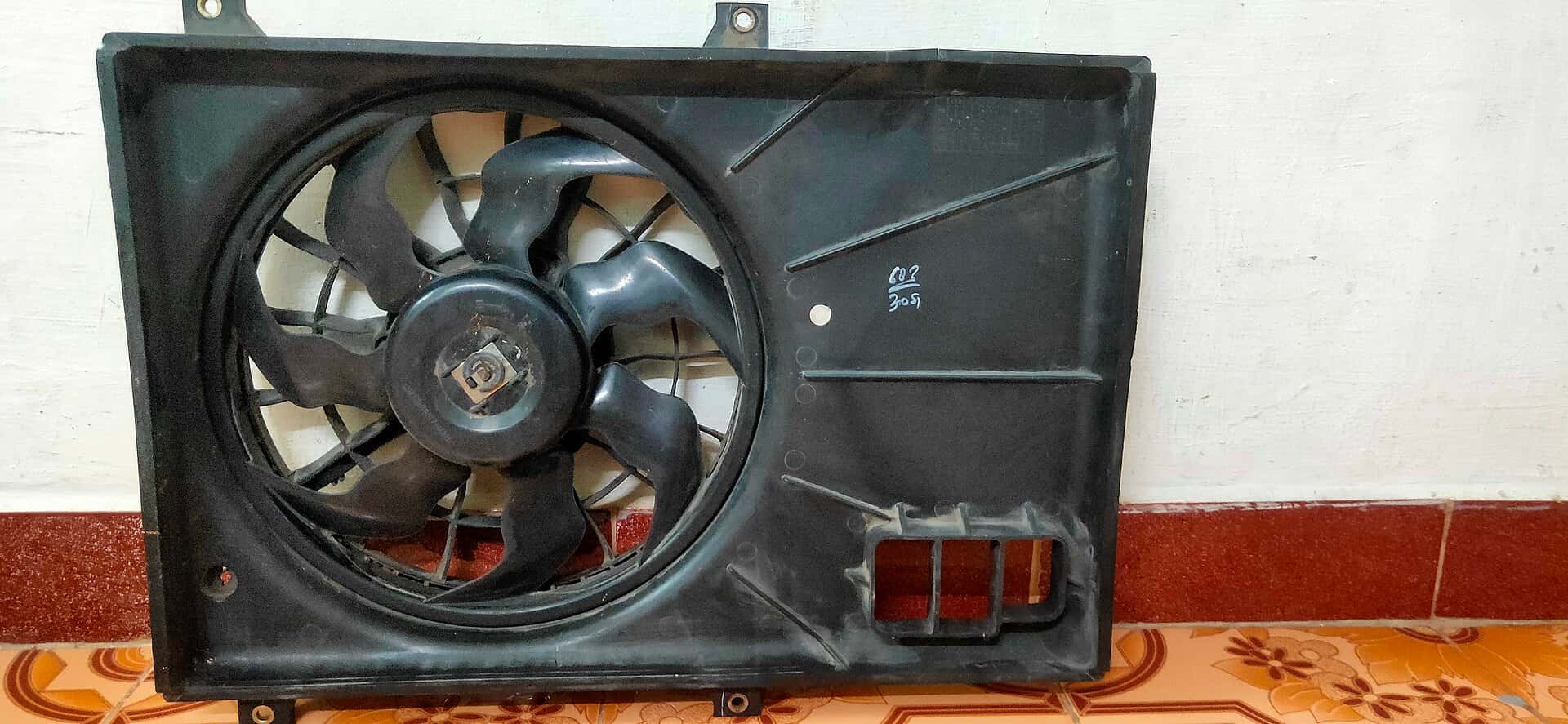

Respond to the warning before investigating the fan
Follow the overheating instructions for the actual vehicle. Ford’s Fiesta reduced-engine-performance guidance, for example, describes stopping safely and switching off an overheating engine. It warns that continued operation can result in an engine shutdown. That is not a basis for calculating a safe remaining distance in another vehicle.
If a warning occurs, record it once safely stopped. Do not repeat an idle or road test for the sake of a better video. A clear account of the event is more useful than making the engine overheat again.
A fan observation needs an operating context
Separate what you saw from what you expected. Was the engine already warm? Was the air conditioning operating? Was there an actual temperature message, a gauge change or only an unfamiliar sound? The repairer needs those details to decide what the installed cooling system should have been doing.
A fan that was not turning during a brief look is not automatically a failed motor. Equally, hearing it run does not establish that the entire cooling system is healthy. For a controlled electric fan, the useful service question is whether its expected command and actual response were checked under the applicable vehicle procedure.
Do not use “the fan must always run when the A/C is on” as a rule for every vehicle. Preserve the actual A/C setting as part of the record and let the exact system’s requirements govern the assessment.
An electrical finding can matter as much as the fan motor
GM’s September 2016 bulletin 16-NA-123 describes a cooling-fan concern on the listed 2016 Chevrolet Malibu application. It directs technicians to inspect for water intrusion and corrosion in a cooling-fan connector. The physical connector finding matters; an inoperative fan does not automatically establish a failed motor.
This is a historical, vehicle-specific example, not an instruction to disconnect or repair another car’s wiring. Ask how any electrical finding was established under the current procedure for the actual vehicle before choosing a fan assembly, sensor or other component.
Engine shutdown does not make the fan area safe to touch
The Ford C-MAX gasoline cooling-fan instructions note that the fan can continue running after the vehicle is switched off. They also warn owners to keep hands and clothing clear. An owner observation should not become a hand, tool or wiring test near the blades.
Cooling-system pressure is a separate issue. Ford’s Focus cooling-system precautions warn against removing the coolant cap while the engine is running or the system is hot. Use your own manual for any permitted cold-level check and the specified fluid; do not improvise a hot inspection or add a generic coolant mixture.
Give the repairer the event, not a parts order
| Record | Useful detail |
|---|---|
| Temperature information | Exact warning text or gauge behavior, noted once safely stopped. |
| Operating circumstances | Stopped traffic, ordinary travel, approximate weather and whether A/C was already in use. |
| Fan observation | What was actually heard or seen, without approaching the fan or prolonging engine operation. |
| Relevant history | Recent cooling-system work, the actual fluid used, reported leakage and prior overheating records. |
Ask what finding identifies the cause of the temperature concern. If fan operation was implicated, ask how its expected behavior and response were established. If the event was not reproduced, the repair order should distinguish that uncertainty from a fault that was found and corrected.
A fan, relay or sensor replacement should follow that evidence rather than the article title. For a purchase or a vehicle returning from repair, keep the original complaint, completed work and any follow-up instructions together. A short drive without a warning is different from a documented explanation of why the vehicle overheated.
0 comment(s) so far on Radiator Fan Not Working: Overheating At Idle