

Power Window Not Working? Controls, Movement and One-Touch
Windows and door controls
A power window complaint starts with which glass stopped moving and how it responded to the controls. A window that works only while the switch is held is a different concern from glass that reverses, sits crooked or does not move at all. Those observations help define the problem; they do not identify a failed motor or regulator by themselves.
Updated October 16, 2026
Check the operating conditions before naming a part
Read the window section for the actual vehicle, including its ignition, retained-power and lockout conditions. The 2021 gasoline Honda CR-V manual, for example, permits operation for up to ten minutes after switching the ignition off, but opening either front door cancels that function. A window that stops responding after a door opens has different context from one that fails with the required power state active.
That CR-V’s window-lock button also changes which windows can operate: with the lock engaged, only the driver’s window operates. Ford’s 2025 F-150 manual describes rear-control lockout for Crew Cab and SuperCab models. Match the control to the vehicle rather than assuming every lock button disables the same switches. Retain the appropriate child-protection setting.
Describe the function that changed
| Observation | Useful distinction |
|---|---|
| One window does not respond | Identify that door and whether the complaint occurs at its own switch, the driver’s control, or both. |
| Glass moves while a switch is held | Separate ordinary movement from the equipped one-touch function. |
| Glass begins closing, then reverses | Describe the reversal and any visible obstruction; do not treat it as proof of a failed switch. |
| Glass is crooked, drops or grinds | Stop operating it and arrange assistance; further switch cycling does not establish the cause. |
Keep hands, fingers, children and pets clear of the opening. The cited manuals warn about trapping injuries, including operation by unattended children. Record what already happened rather than using a body part or inserted object to test whether protection works. If the glass is visibly displaced or unstable, leave its movement and securing to a repairer.
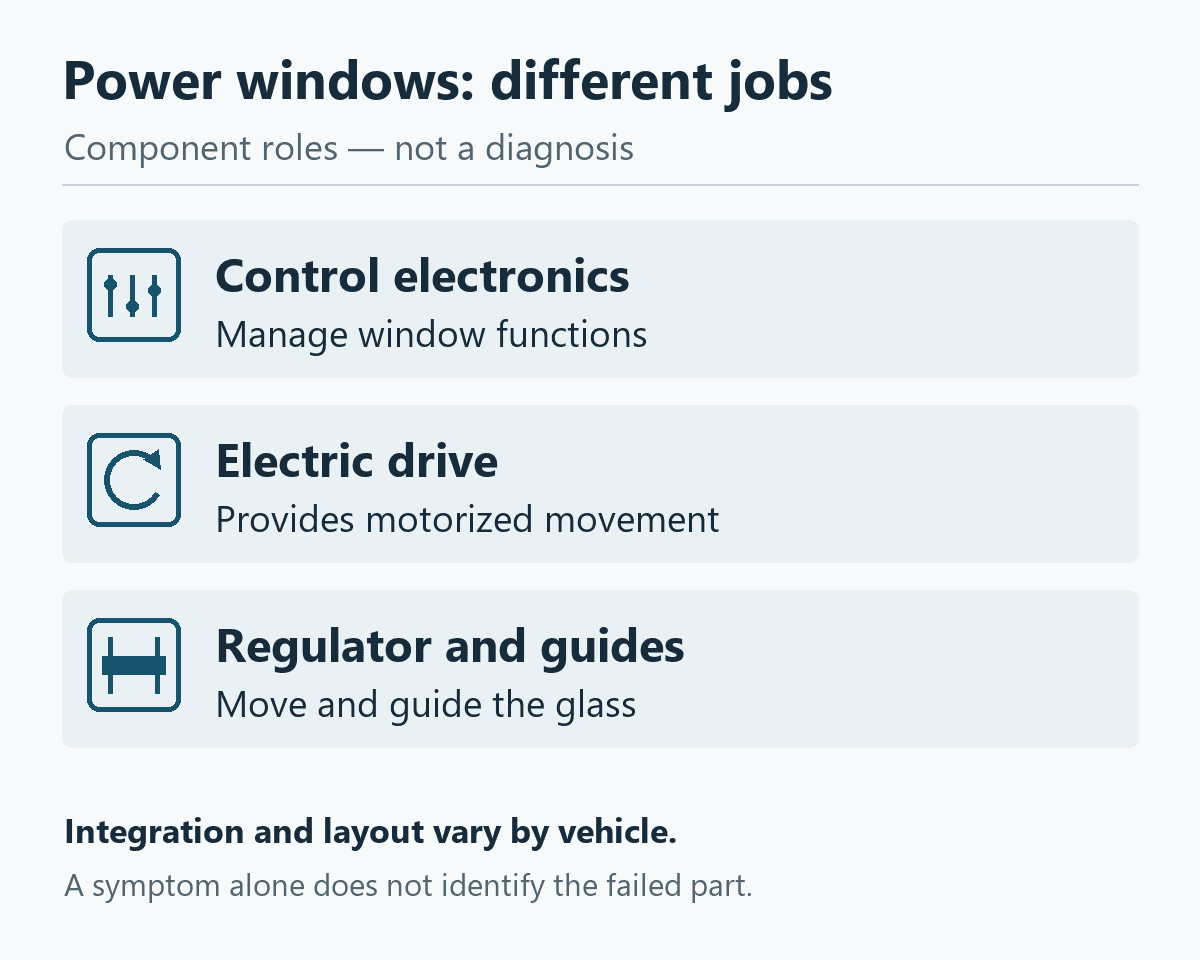
The motor, regulator and controls do different jobs
Supplier Brose’s door-system description separates cable window regulators and guide rails from their electric drives. It also describes drives with integrated electronics and door control units that manage window functions. The mechanism and its control are connected, but they are not interchangeable names for one part.
A sound from the door does not establish that the drive is moving the glass correctly. Silence does not establish that the motor itself has failed. Ask which part of the operating path was checked and what finding supports the recommendation. The exact assembly and available replacement components depend on the vehicle, rather than the generic name used in an estimate.
A one-touch reset is not a universal repair
The cited F-150 manual treats one-touch operation and its reset separately from ordinary switch-held movement. It also explains bounce-back: the window stops and reverses when it detects an obstruction while closing. A reversal therefore deserves its own description instead of being grouped with every window that will not move.
Ford warns that overriding bounce-back removes its obstacle-reversal protection. Do not use an override as a generic troubleshooting step. Use the complete instructions for the actual equipment, and obtain assistance when closure remains unreliable. A procedure written for one model is not a transferable reset sequence for another.
Keep the repair finding specific
Give the repairer the affected door, switch used, direction of travel, stopping point and any noise or visible glass misalignment. Note whether ordinary movement, one-touch operation or both were affected. After work, ask which component or adjustment addressed that documented complaint and which window functions were checked. Keep any unresolved limitation explicit rather than treating one successful movement as proof that an intermittent problem is gone.
0 comment(s) so far on Power Window Not Working? Controls, Movement and One-Touch