

Fuel Smell After Filling Up: Safety Before Diagnosis
Fuel and refueling
Updated October 16, 2026
A gasoline smell after filling up does not identify a loose cap, a vapor-system fault or a liquid leak. Treat the possible release of fuel or vapor as a safety concern before trying to name a part. Another start, a test drive or an attempt to find the smell by leaning over the filler is not a useful owner diagnostic step.
Separate fuel-odor precautions from fire response
Mopar’s archived 2005 Sebring Coupe manual gives a direct instruction: if fuel is smelled or a leak is seen, do not operate the vehicle and call for assistance. It warns that an ignition spark, flame or smoking material could ignite the fuel. That is a specific manufacturer example of why an odor should not be dismissed because the engine still runs or no puddle is visible. Follow the warning and assistance instructions for your own vehicle; do not wait for another symptom to justify asking for help.
A vehicle fire calls for a different response. The U.S. Fire Administration says to pull over when safe, stop the engine, get everyone out, move at least 100 feet away and well away from traffic, and call 911. Do not return to the vehicle or try to fight the fire. If a fire is suspected under the hood or in the trunk, do not open it. These are fire-response instructions, rather than a procedure for investigating an odor.
Know whether there is a cap to check
“Tighten the gas cap” is not an instruction that fits every filler design. The gasoline 2021 Honda CR-V manual describes a capless fuel tank: the nozzle enters the filler neck and the opening seals again after removal. It also warns against using smaller tubes or other non-station devices that could damage the filler opening.
That example makes equipment identification important. Describe a loose or missing cap only if the actual vehicle uses one and that condition was observed. Do not pry open a capless filler, insert improvised tools or treat a guessed cap problem as proof that the rest of the system is sound.
The first automatic shutoff leaves expansion space
Honda explains that the CR-V’s nozzle stops automatically to leave room for fuel expansion as air temperature changes. Its instructions say not to continue adding fuel after automatic shutoff. The same manual warns to stop the engine and keep heat, sparks and flames away when handling gasoline. Use the exact refueling instructions for the model, rather than applying one nozzle position, cap procedure or waiting time to every vehicle.
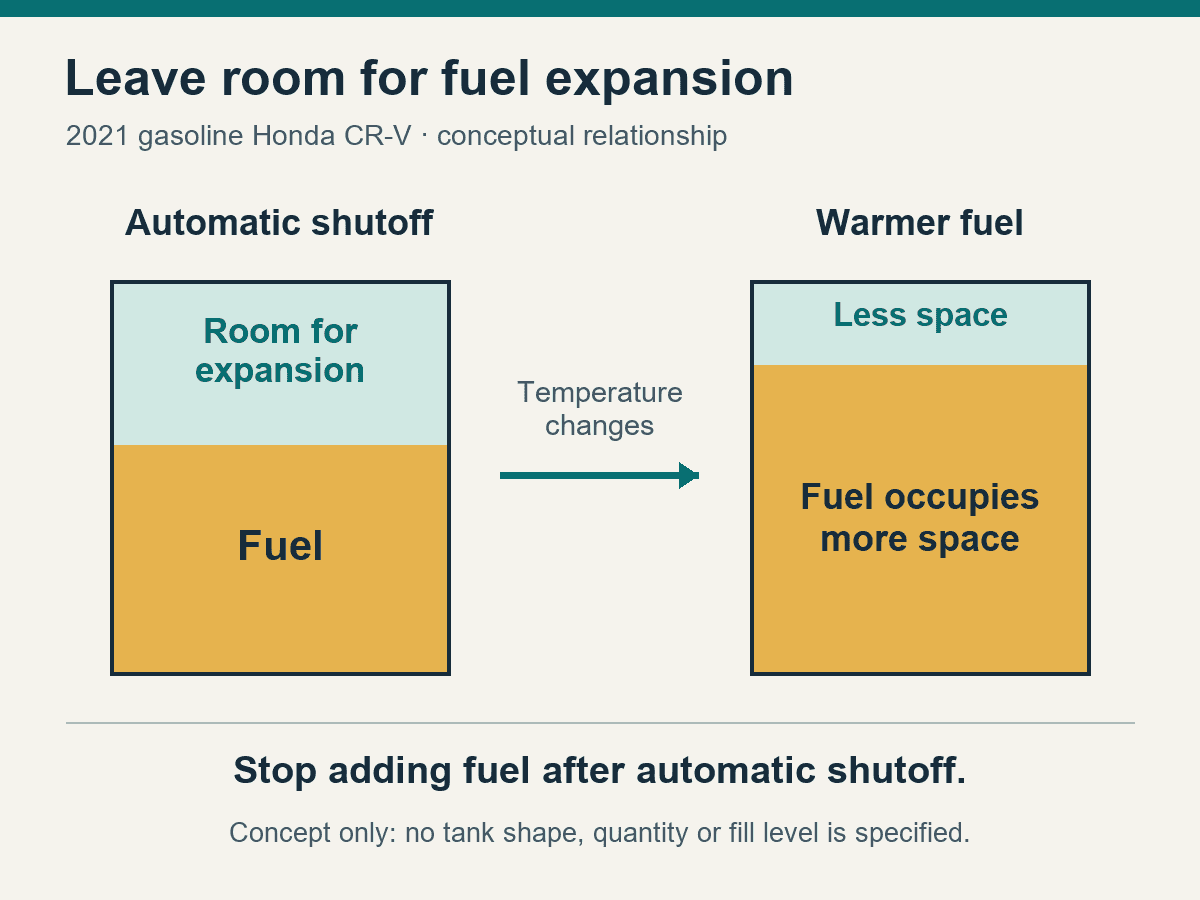
If topping off happened, report it as part of the history. It does not establish that a particular valve, canister, seal or line has failed. The refueling event and the cause of a continuing odor still need to be distinguished.
Ask for findings that explain the original concern
Once away from the hazard, write down what you already noticed: when the odor began, whether it was inside or outside the cabin, whether fuel was visibly spilled, and any warning message. Keep the fuel receipt and note recent refueling-system work. Do not start or refill the vehicle again simply to reproduce the concern.
Ask what source of fuel or vapor was actually found, which inspection finding supports the proposed work, and whether a warning message was a separate issue. The record should identify the vehicle’s filler design, the original complaint, the confirmed finding and completed repair. A replaced cap or cleared warning alone does not explain an unresolved smell.
0 comment(s) so far on Fuel Smell After Filling Up: Safety Before Diagnosis