

Car Makes A Rattling Noise: Heat Shield, Exhaust, Or Engine?
Noise and diagnosis
A rattling sound does not identify a heat shield, exhaust part or engine fault by itself. The useful first distinction is when it occurs: while parked, during ordinary acceleration, over bumps or alongside a warning. Record that pattern without repeatedly provoking the noise.
Updated October 15, 2026
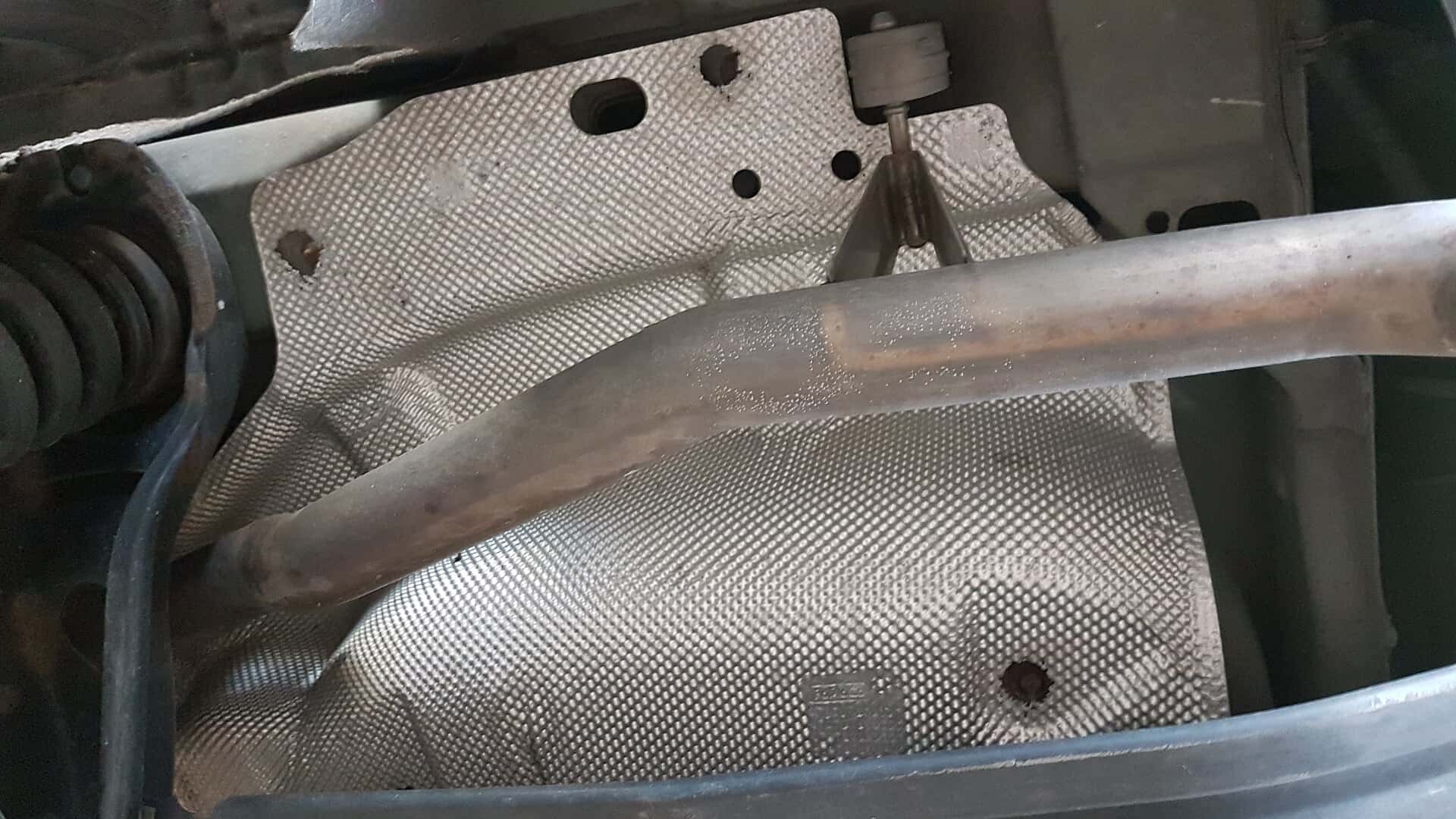

Describe the event before naming the component
Was the vehicle stationary or moving? Did the sound begin after a cold start, with the engine warm or only as it crossed a rough surface? Note whether it was a brief metallic buzz, a repeated knock or movement from one area of the cabin or underbody. Use the description you actually heard rather than adopting a repair term from a video.
Engine speed and road speed are different clues. A sound present while parked and one heard only over bumps give a technician different starting observations. That distinction helps organize a complaint, but it does not prove which part failed or whether continued driving is appropriate.
A heat-shield rattle is a finding, not a harmless assumption
General Motors’ June 2022 document PIT5926 describes an underbody rattle on listed truck and SUV applications associated with loose or missing exhaust heat-shield retainers. Its value as an example is the connection between a reported sound, an inspected location and a specific finding.
It does not establish that a similar sound on another vehicle comes from those retainers. Nor does calling a sound a heat-shield rattle establish that it is harmless. Ask the technician to identify the source and the appropriate repair rather than treating shield removal as a universal cure.
A similar sound can have a different explanation
Hyundai’s historical November 2012 bulletin 12-EM-007 illustrates why sound alone is insufficient. For the listed 2.0-liter turbo applications and operating conditions, it describes turbocharger wastegate-related rattle or buzzing that can resemble a loose exhaust shield.
The bulletin identifies that particular condition as an operating characteristic. It is not permission to declare every Hyundai rattle normal, and it is not a diagnosis for another engine, model year or noise pattern. A shop should use current information for the actual vehicle rather than applying an old bulletin because its title sounds familiar.
Warnings change the next step
A rattle accompanied by an oil-pressure warning is a different situation from an unexplained noise with no recorded warning. Ford’s 2018 C-MAX and C-MAX Hybrid manual, for example, directs the driver to stop safely and switch off the engine for its low-oil-pressure message.
Follow the warning instructions for your own vehicle. Do not keep the engine running or accelerate again simply to obtain a better recording. A recording is useful only when it can be obtained without creating another problem; an existing clip and a written account are enough to begin the conversation.
Bring a short, specific record
| Detail | Useful observation |
|---|---|
| Operating state | Parked, ordinary acceleration, steady travel or bumps. |
| Temperature and duration | First start or warm operation; brief event or continuing sound. |
| Location and change | Where it seemed to come from and whether the pattern is new or worsening. |
| Warning or recent work | Exact message and relevant service, impact or modification history. |
Leave underbody access, hot exhaust contact and moving-component checks to a properly equipped repairer. Ask whether the original concern was observed, what physical or diagnostic finding supports the proposed repair and what remains uncertain if the noise could not be reproduced.
For a used vehicle, retain that explanation with the inspection and repair records. A noise that disappeared during a short visit has a different evidence trail from a source that was found and repaired. The paperwork should make that distinction clear.
0 comment(s) so far on Car Makes A Rattling Noise: Heat Shield, Exhaust, Or Engine?