

Sticking Brake Caliper: Drag, Heat and Inspection Findings
Brakes and control
Updated October 16, 2026
A car that feels held back, pulls while braking or develops a strong hot smell needs a brake assessment. Those observations do not confirm a sticking caliper. The useful distinction is between the complaint, evidence that a brake is dragging and the component responsible for it.
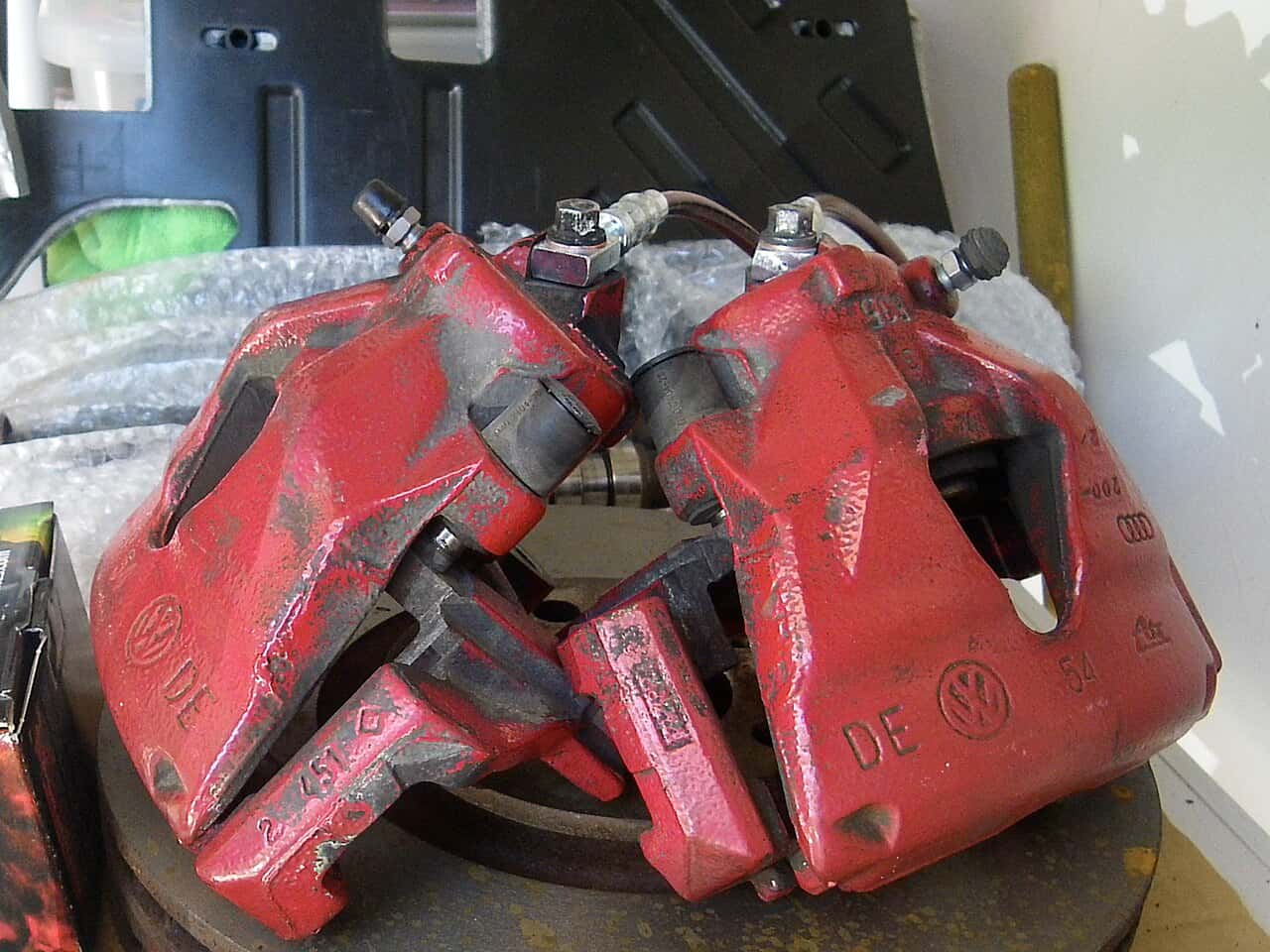

What a sticking caliper can involve
A disc-brake caliper transfers hydraulic pressure to the pads. Its movement and release matter as well as the thickness of the friction material. In its caliper component guidance, Brembo describes the piston seal’s role in allowing the piston to return after braking. It also identifies deteriorated sliding-guide components as potential sources of blockage, residual drag, disc overheating and abnormal wear.
That gives an inspection several questions to answer. Is the piston moving correctly? Are the applicable guides free and their protective parts intact? What condition are the pads and disc in? It does not mean every caliper has the same construction, or that a smell identifies which part has failed.
Separate the possible fault from the evidence
HELLA’s workshop inspection guidance checks caliper pistons, seals and sliding parts, but also the brake hoses, wheel bearings and surrounding chassis components. Its hose checks include internal swelling as well as leaks, porosity and chafing. Looking only at the most visible component can therefore leave an important question unanswered.
| Finding to establish | Relevant evidence | What it does not prove alone |
|---|---|---|
| A brake is not releasing properly | Documented drag or release findings | That the caliper assembly is necessarily the cause |
| Pads are worn unevenly | Inner and outer pad measurements and component movement | A particular failed piston, guide or hose from the wear photograph |
| A caliper component is damaged | Its specific condition and the applicable repair instructions | That every surrounding part is sound or that new pads alone resolve it |
These are questions for a qualified inspection, not a home wheel-off test. Do not jack the vehicle, reach around hot brakes or touch a wheel to compare temperatures. Keep any photograph or warning message already obtained without trying to reproduce the fault.
Changed braking takes priority
If braking or control changes, or there is smoke or a strong hot smell, stop in a safe place and arrange assistance. Do not make another drive to see whether the symptom returns. An online explanation cannot establish whether the vehicle is suitable to continue.
The 2021 gasoline CR-V manual, printed page 637, provides a specific warning example: no resistance from the brake pedal requires stopping immediately in a safe place. Its red brake-system indicator can concern low fluid or a system malfunction; it is not a caliper diagnosis. Follow the actual vehicle’s warning instructions rather than borrowing a reset or fluid procedure from another model.
Make the inspection record useful
Describe what you already noticed: pulling versus shaking, a warning message, where a smell seemed to come from, and whether the change followed recent brake work. Include the earlier invoice. A new symptom after pad replacement does not, by itself, prove that the new pads or caliper are defective.
Ask the report to identify the affected wheel, pad and disc measurements, the movement or hydraulic finding, and the manufacturer limits used. Keep a recommendation to replace a component separate from the evidence explaining why. A parts list is less informative than a finding connected to the original complaint.
Finally, ask how the completed repair was checked against that complaint. A new caliper does not document the condition of a hose, and an adjustment cannot put worn friction material back. Keep the initial findings and completion notes together so a recurring concern can be compared with actual evidence.
0 comment(s) so far on Sticking Brake Caliper: Drag, Heat and Inspection Findings