

Musty A/C Smell: Filter, Moisture and Water Intrusion
Cabin air and moisture
Updated October 16, 2026
A musty smell from the vents is a description, not a diagnosis. The useful first distinction is whether it appears briefly when ventilation starts, stays in the cabin with the system off, or comes with weak airflow or wet carpet. Those patterns can lead to different checks; replacing a filter or applying an odor treatment does not establish that a water problem has been repaired.
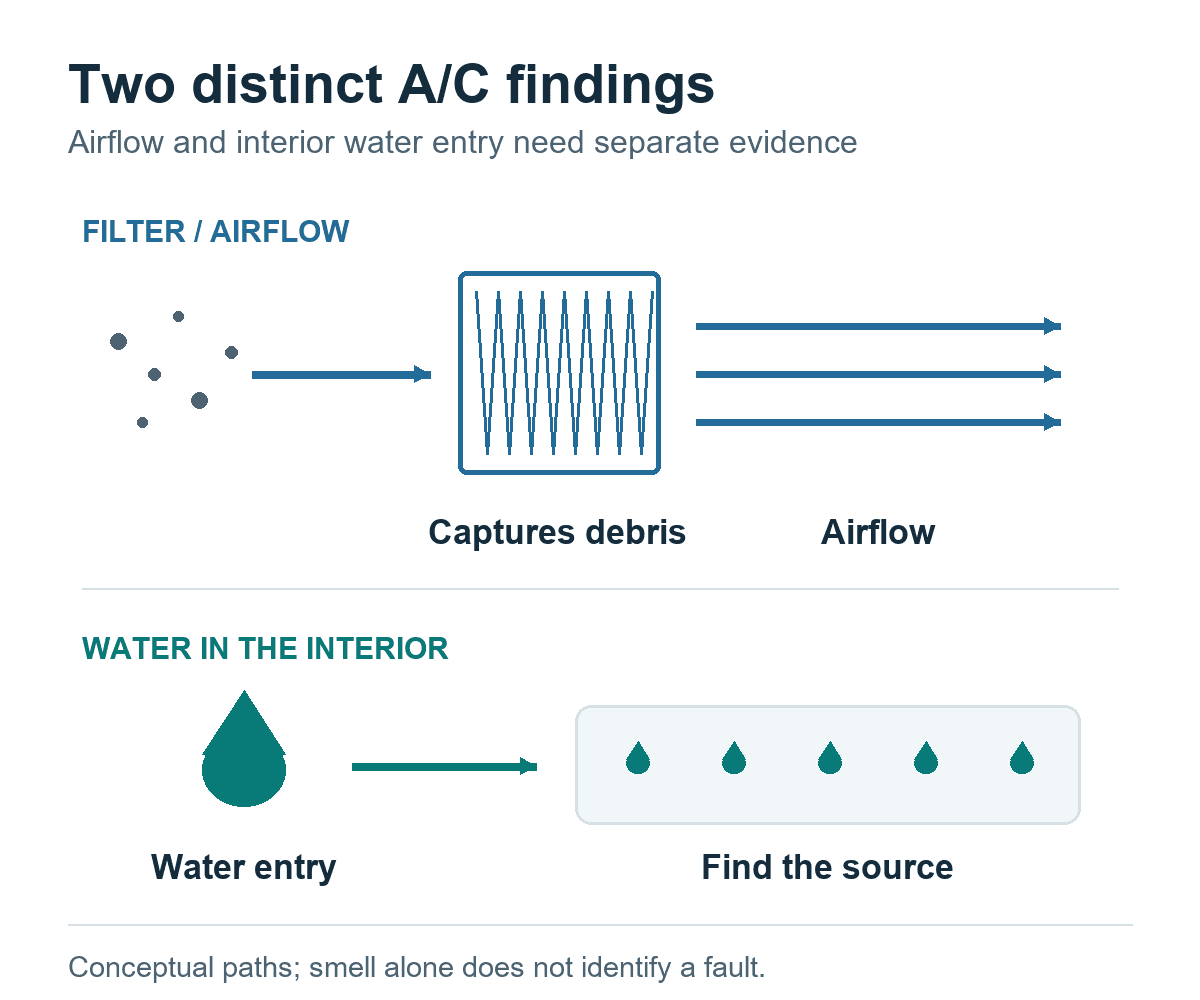
Separate the smell from the other symptoms
Write down what you already notice during ordinary use: whether the car has been parked overnight, whether it recently rained, how long the smell lasts and whether it seems to come from the vents or the interior. Note the settings in use without deliberately recreating a problem while driving. A description such as “damp smell for the first minute after overnight parking” is more useful than deciding that the evaporator is moldy.
| What you notice | What needs separating |
|---|---|
| Brief odor when ventilation starts | Start-up vent odor versus a smell that persists throughout the cabin. |
| Weak airflow or windows that fog easily | Filter maintenance and airflow performance versus the source of the odor. |
| Damp carpet or a smell after rain | Where water enters or collects, before choosing an odor treatment. |
A filter has a specific job
The 2021 gasoline Honda CR-V manual, printed page 609, describes its dust and pollen filter as collecting airborne pollen, dust and debris. It ties replacement to the Maintenance Minder, with earlier replacement in very dusty conditions. Honda also identifies noticeably reduced airflow and easily fogged windows as possible reasons the filter needs replacement.
That is useful maintenance guidance for that vehicle, not a universal interval or proof that a dirty filter explains every smell. Check the matching manual and the actual filter finding. If replacement is recommended, ask whether it addresses restricted airflow, visible contamination or a separate maintenance requirement—and what evidence explains any remaining odor.
Start-up odor and water intrusion are different problems
In Toyota’s HVAC Odor Maintenance bulletin, revised in November 2016, the manufacturer describes odors accumulating in the system and being released as evaporator temperature changes. For its listed Toyota applications, it also discusses moist air trapped while parked. Its procedure is intended to reduce odor intensity, and Toyota cautions that a constant odor or outside debris may require a different approach. This does not establish the cause of an odor in another vehicle.
Wet carpet deserves its own explanation. Toyota’s June 2024 water-intrusion odor bulletin expressly separates intrusion-related smells from general HVAC odor. It requires identifying and repairing the water source before its remediation process applies. It also excludes severe flooding. These are professional procedures for specified applications, not instructions to spray chemicals into any vehicle’s vents.
A drain problem needs evidence, too
A Toyota drain-hose bulletin, revised in August 2023, covers a particular disconnected-hose and/or oil or grease odor concern on specified Highlander, RAV4 and Tundra applications. Equipment and production restrictions matter. The bulletin does not support diagnosing every musty smell as a blocked drain, or treating all water entry as the same repair.
Ask for the finding in plain language: where moisture was found, whether the entry or drainage fault was identified, and which vehicle-specific procedure applies. Keep the odor description separate from the confirmed cause. A service record that distinguishes filter maintenance, water-source repair and odor treatment makes a repeat complaint easier to evaluate without assuming the first replacement solved everything.
0 comment(s) so far on Musty A/C Smell: Filter, Moisture and Water Intrusion