

After a Pothole: Tire Damage, Wheels and Alignment
Tires and road impacts
Updated October 16, 2026
After a pothole impact, separate what you felt from what an inspection establishes. A new pull, vibration or pressure warning is useful evidence, but it does not identify a bent wheel or prove that alignment is the only problem. Tire damage can be hidden even when the outside looks ordinary.
Deal with the change in control first
If the vehicle develops a sudden vibration or feels difficult to control, reduce speed and reach a safe place out of traffic. Do not continue a trip to see whether the disturbance disappears. Avoid walking into traffic to inspect a wheel; arrange roadside assistance when you cannot assess the situation safely.
The 2024 Super Duty manual provides a specific highway-hazard example. After a sudden ride disturbance, it directs the driver to stop safely and inspect for damage; if the cause cannot be detected, it calls for towing for inspection. Its tire-care section also says damaged tires should not be used. That example is not a universal spare-changing procedure or permission to drive on a damaged tire.
A normal-looking sidewall does not rule out impact damage
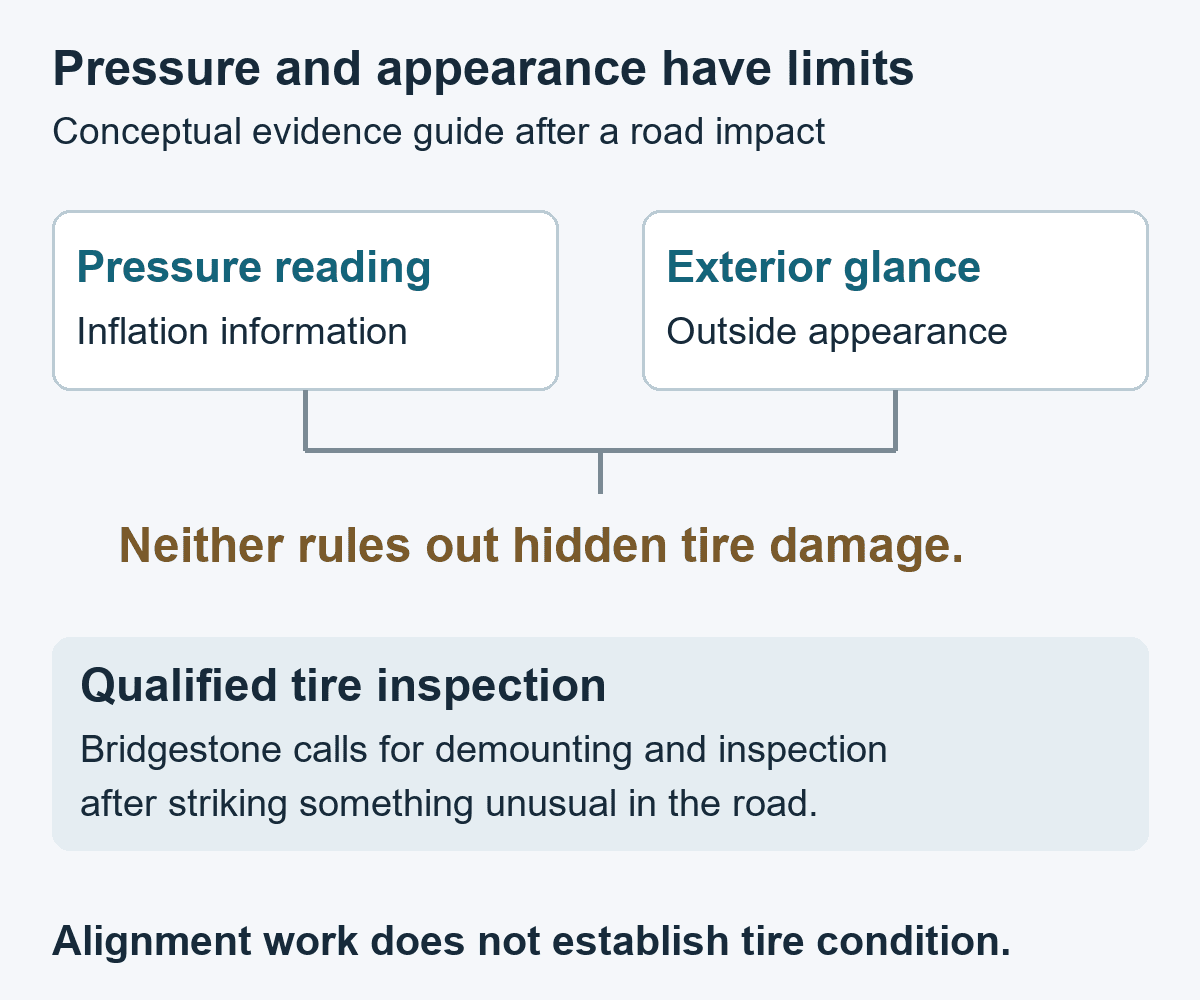
Bridgestone’s tire safety manual warns that damage after striking something in the road may have no visible exterior sign. It recommends a qualified tire professional demount and inspect the tire after such an impact. A glance at the tread or a photograph of the outside cannot provide the same information.
A bulge, exposed cords or a damaged sidewall needs immediate attention. Michelin’s replacement guidance identifies a sidewall bubble as internal cord damage requiring replacement. Do not treat a suspected bulge as something to monitor on the next drive, press it to examine it or assume adding air repairs the structure.
Keep tire, wheel and alignment findings separate
Ford explains that a hard pothole jolt can damage a tire or disturb alignment. Michelin also distinguishes tire damage from alignment or balance concerns when discussing vibration and pulling. The same complaint can therefore lead to different findings; it does not justify ordering an alignment or replacing a wheel without assessment.
| Observation after the impact | Evidence worth requesting |
|---|---|
| Pressure loss or a visible sidewall change | Tire condition and the identified source of air loss |
| New vibration or ride disturbance | Tire and wheel findings, with the inspection’s limits explained |
| Pulling or an off-center steering wheel | Condition findings and applicable alignment measurements |
Ask whether the report identifies an actual bend, crack, tire injury or out-of-specification measurement. A visible scrape alone does not establish all the damage, and an alignment adjustment does not document that a tire’s internal structure was inspected. Keep those jobs and their findings distinct on the repair record.
Pressure is one check, not a condition certificate
Use the vehicle’s placard and matching manual for its specified cold pressures. The Super Duty manual describes TPMS as a warning for significant underinflation or a system malfunction, not a substitute for tire care. No warning light—or a pressure reading within specification—establishes that an impact-damaged tire is sound.
Record the impact date, which side was involved and changes already noticed during ordinary use. Keep existing photographs and repair records. Do not stage a hands-off steering test, repeated braking run or higher-speed vibration test. The useful outcome is documented tire and wheel condition plus any justified alignment or other work, rather than an assumption based on the pothole’s size.
0 comment(s) so far on After a Pothole: Tire Damage, Wheels and Alignment