

When to Replace Tires: Tread, Age and Damage
Owner Guide
Knowing when to replace tires means checking tread, age, damage and changes in how the vehicle feels. A tire can need replacement before its tread wears out. An unworn spare also ages, and one acceptable tread measurement does not establish that the rest of a tire is sound.
Updated October 16, 2026
Measure tread, then look beyond the number
The Bridgestone and Firestone tire safety manual calls for immediate replacement when tread reaches the built-in wear indicators at 2/32 inch (1.6 mm), or when cord or fabric is exposed. The 2024 Ford Super Duty manual gives the same tread replacement threshold.
Check for uneven wear as well as remaining depth. A worn shoulder or flat spot deserves attention even if another part looks deeper. A coin check cannot evaluate hidden damage, tire age or the cause of uneven wear. Treat a depth reading as one part of the decision, rather than permission to keep using a damaged tire.
Damage can overrule usable tread
A sidewall bulge or bubble, an opening cut with exposed cords, or tread separation should not wait for the next mileage interval. Michelin identifies bulges and exposed cord damage as reasons for immediate replacement. Ford warns against using damaged or excessively worn tires.
Other cracks, cuts or suspected impact damage need a tire professional’s assessment. Bridgestone notes that damage after a road impact may be internal and invisible from outside. Persistent vibration or a new pull also needs investigation; Michelin notes that alignment or balance can cause handling changes, so those symptoms alone do not prove the tire must be replaced.
Age recommendations have different starting points
Michelin’s replacement guidance recommends a professional inspection at least annually after five years in service. Separately, it recommends precautionary replacement ten years after manufacture, including spares, regardless of remaining tread. That is not a promise that an individual tire will remain usable for ten years.
Vehicle instructions can call for earlier replacement. The 2024 Ford Super Duty owner’s manual (printed page 484) generally recommends replacement after six years regardless of tread, potentially sooner with heat or frequent heavy loading. It also addresses replacing the spare. This is a specific vehicle example, not a six-year rule for every car.
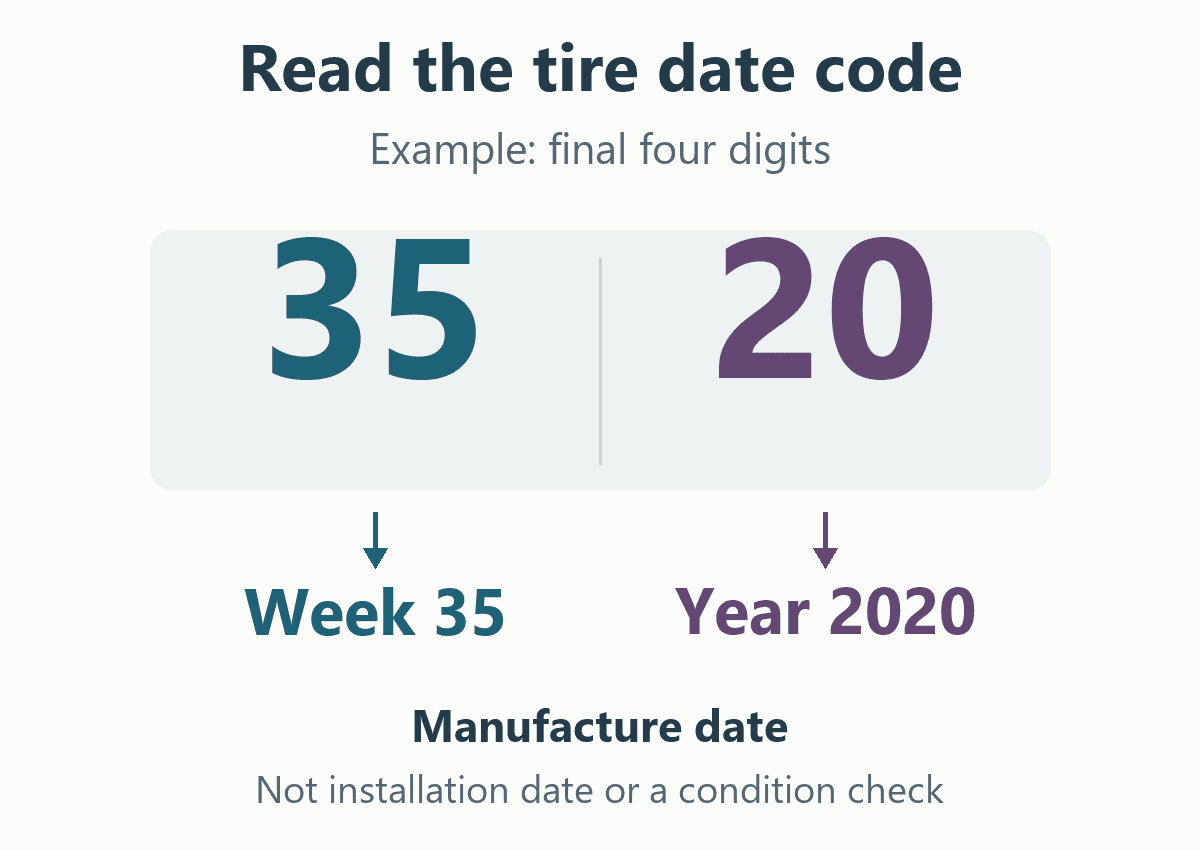
For tires made since 2000, the last four digits of the full DOT identification number show manufacturing week and year. For example, 3520 means week 35 of 2020. Record the date and compare the applicable tire and vehicle instructions; do not restart the age clock when buying a used vehicle.
Decide what needs replacement, not just how many tires to buy
A puncture does not automatically mean a repair is appropriate. Bridgestone requires an internal inspection with the tire removed from the wheel and excludes damage outside the repairable tread area. A sidewall injury is not a routine tread-puncture repair. Have the professional explain whether the tire is repairable and why.
When replacement is necessary, follow the vehicle’s tire size and specification requirements. Bridgestone notes that some AWD and 4WD vehicles may require replacement of multiple tires, potentially all four. Ask about compatibility with the remaining tires instead of assuming one new tire will suit every drivetrain. Include the spare in the condition and age review.
0 comment(s) so far on When to Replace Tires: Tread, Age and Damage