

Check Engine Light: Startup, Steady and Blinking Warnings
Engine warning lamps
Updated October 16, 2026
The check-engine lamp is part of the emissions-monitoring system. Identify the symbol and message, whether the engine was running and whether the lamp stayed on or blinked. That context determines which instructions in the actual vehicle’s manual apply.
A startup lamp check is different from a running warning
The 2024 Ford Super Duty manual says its malfunction indicator normally illuminates with the ignition on and engine off. If it illuminates with the engine running, the emissions-control system requires service. Ford separately identifies an oil-pressure lamp and a powertrain warning, so “an engine light” is not a precise enough description of the indication.
The 2021 gasoline Honda CR-V manual likewise distinguishes an emissions-system lamp that comes on while driving from a blinking indication associated with detected misfire. It also describes a specific five-blink sequence before the lamp goes out when readiness codes have not been set. That startup context should not be confused with a warning that blinks while the engine is running.
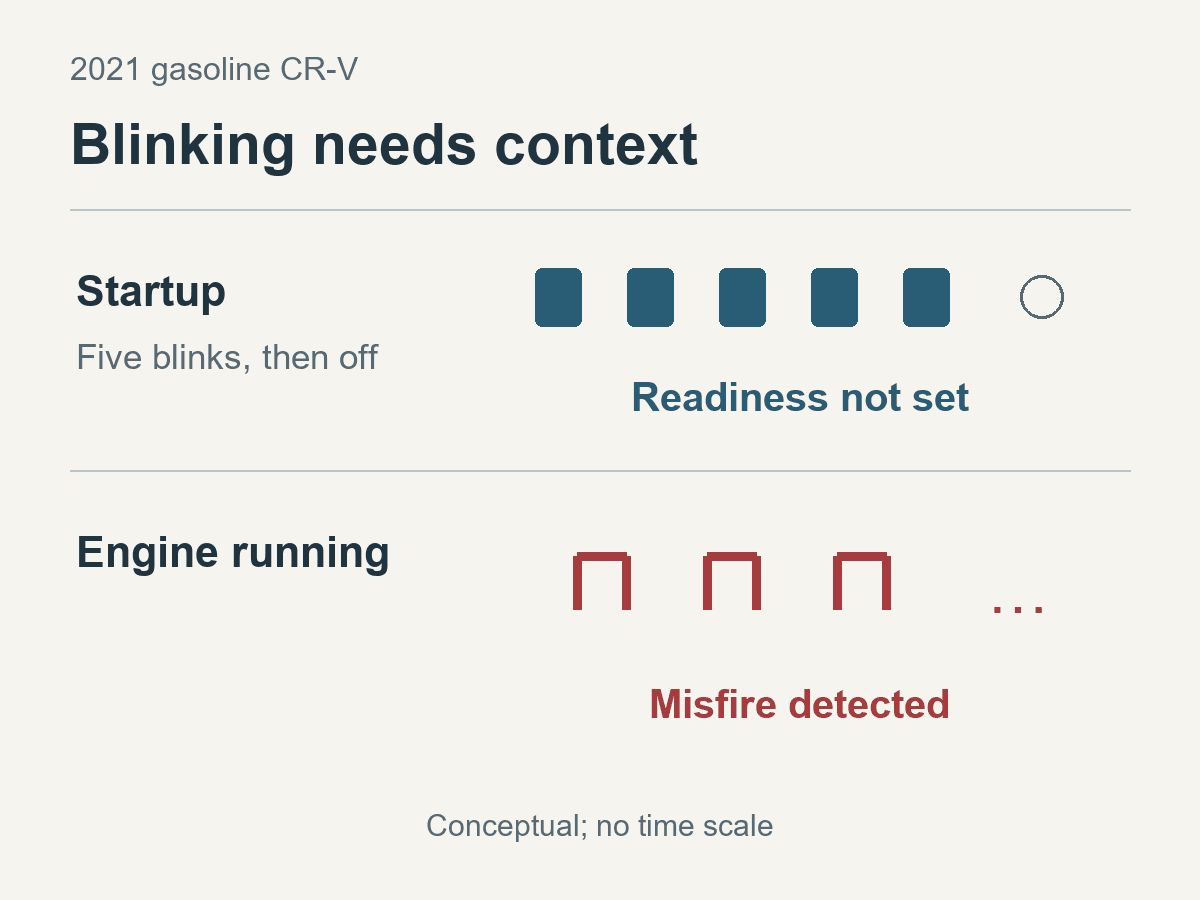
A blinking running warning needs its exact instructions
For its blinking malfunction indicator, Honda directs parking in a safe place away from flammable items and stopping the engine for at least ten minutes and until it has cooled. Its manual then gives model-specific follow-up instructions. Follow the warning and assistance directions for your own vehicle; this example does not provide clearance to continue a journey in another vehicle.
Ford says a flashing malfunction indicator can involve misfire and increased exhaust temperatures that could damage the catalytic converter or other components. It calls for prompt assessment. A steady lamp also calls for service; a lack of shaking or an obvious noise does not document that the monitored condition has been resolved.
Preserve the existing sequence
Write down when the lamp first appeared, the exact message and any other warning present. Include rough running, power loss or unusual odor already noticed, without driving again to reproduce it. Recent refueling or service can be useful history, but the timing alone does not identify an emissions component or prove that a particular repair caused the concern.
If a scan result is available, keep the actual code and the report that accompanies it. Ask what the recorded information and subsequent inspection established about this vehicle. A code description, a generic parts list and a confirmed repair finding are different records. Retain the information before authorizing code clearing or other work that changes the original diagnostic context.
For the repair discussion, ask which finding supports the recommended work and how the provider will check the original concern afterward. The useful result is a documented explanation linked to the observed warning, rather than a promise that a cap adjustment, part replacement or cleared lamp will cure every check-engine complaint.
0 comment(s) so far on Check Engine Light: Startup, Steady and Blinking Warnings