

Brake Warning Signs: Lamps, Sounds and Pedal Changes
Brake warnings and observations
Updated October 16, 2026
A brake-system warning, an ABS warning, a parking-brake indication and a new noise are different observations. Record the exact symbol, color and message alongside what happened. They can help the service provider identify the correct instructions, but they do not, by themselves, identify a pad, rotor, caliper or hydraulic fault.
Read the complete brake warning, including combinations
The 2021 gasoline Honda CR-V manual gives different explanations for its red brake-system indicator coming on and blinking. The former can relate to low brake fluid or a brake-system malfunction; blinking can concern the electric parking brake. That is why the word “brake” alone does not describe the indication well enough.
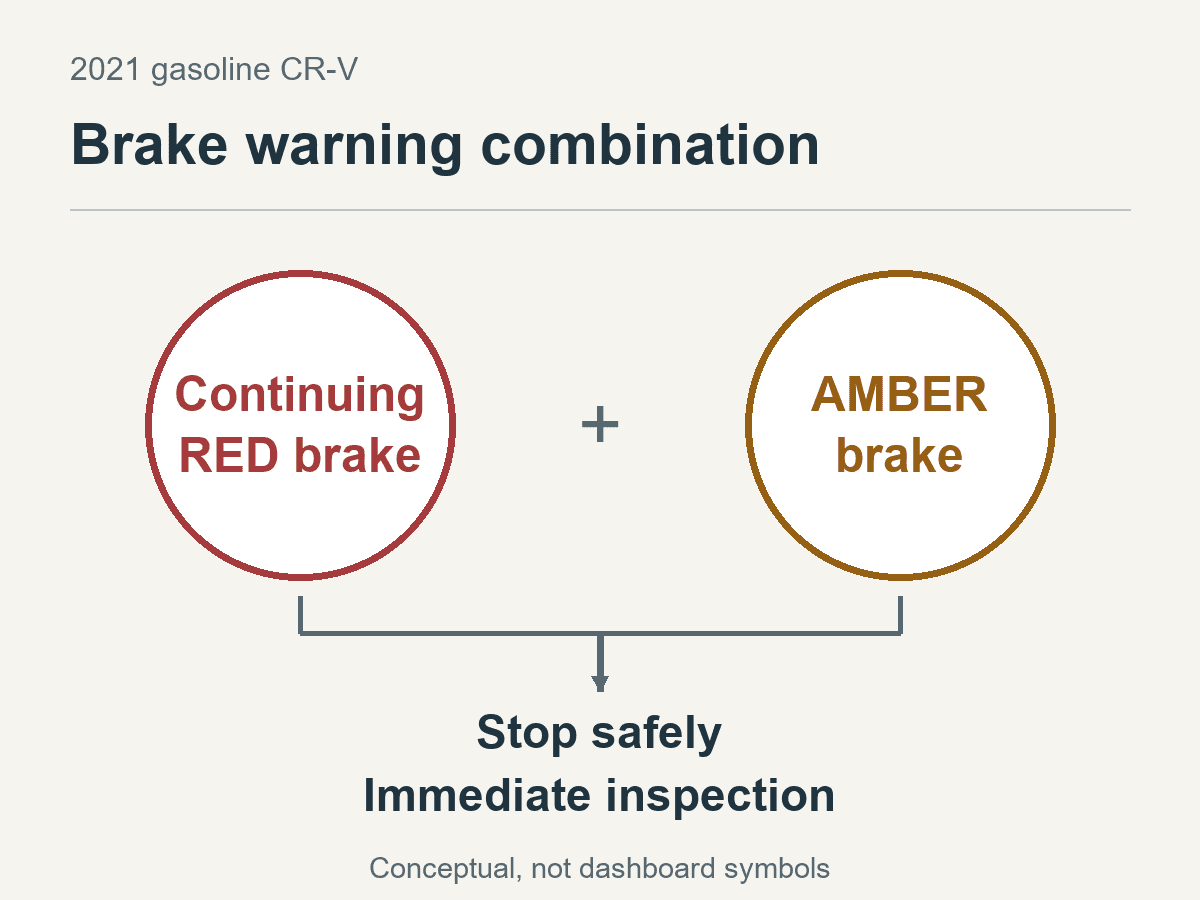
Honda also has a separate amber brake-system indication and specific instructions for combined red and amber indications. A continuing red indication with the amber warning calls for stopping in a safe place and immediate inspection. Record which lamps were present together. These are exact-model examples, not a universal rule that every amber brake symbol has the same meaning.
A brake-system warning is not an ABS-only warning
The 2021 Chevrolet Traverse manual directs the driver to pull off and stop carefully if its brake-system warning comes on while driving. If the light remains on after stopping, it calls for towing for service. The manual warns that stopping may take longer and the pedal may be harder to push or travel toward the floor.
The Traverse manual separately explains the ABS warning, and distinguishes an ABS-only indication from ABS together with the brake-system warning. This distinction does not establish driving clearance from a photograph of the lamps. Preserve both indications and follow the warning and assistance instructions for the actual vehicle.
Describe a noise or pedal change without testing it again
The same Traverse manual treats the brake wear-warning sound as a service concern and also identifies abnormal pedal return height or a rapid increase in pedal travel as reasons for service. It notes that some climate or driving conditions can produce a temporary squeal. That does not make every squeal harmless or establish worn parts from sound alone.
For an existing complaint, describe whether the observation was a sound, a pedal change, vibration, pulling or a warning message, and when it was noticed. Report a substantial change in braking ability when requesting assistance. Do not perform extra stops to measure it or handle brake components to decide whether continued driving is acceptable.
Keep the finding separate from the recommendation
Ask the service provider which warning or complaint was confirmed and what inspection or measurement supports the proposed work for that vehicle. If parts are recommended, request the finding behind that decision. A useful record connects the original concern, the confirmed condition and the work performed; it does not turn a generic symptom list into a repair diagnosis.
0 comment(s) so far on Brake Warning Signs: Lamps, Sounds and Pedal Changes